2026-08-31 · Dan Kowalski
Handling Sewage Backup After Heavy Spring Rains Near Freehold
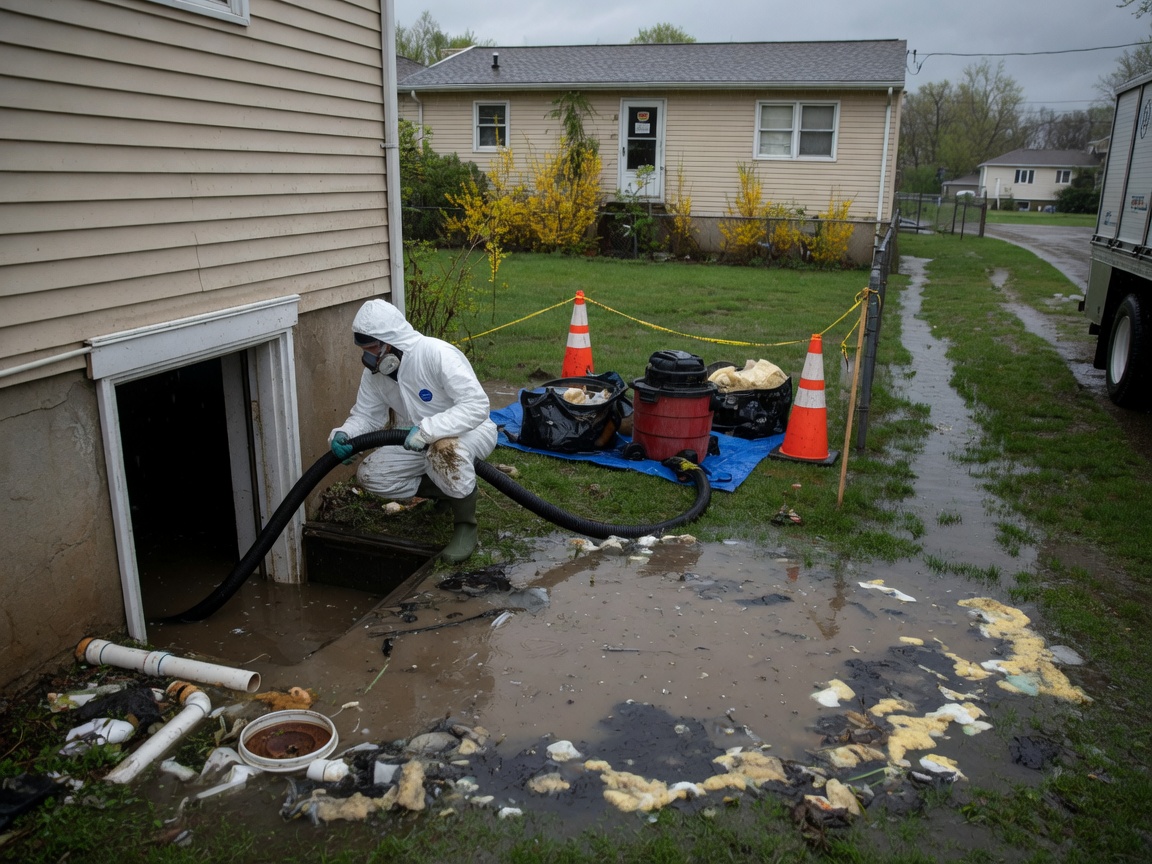
Sewage backups after heavy spring rains near Freehold typically demand professional water extraction and sanitation starting within the first 24 hours to limit bacterial spread and structural damage in Howell homes.
Identifying Local Causes of Spring Backups
Howell sits in Monmouth County with a humid subtropical climate that brings intense spring downpours, often overwhelming older septic and municipal lines in neighborhoods such as Adelphia and Squankum. Homes built before the 1980s along roads feeding into the Manasquan Reservoir frequently experience infiltration when groundwater rises and storm drains back up. The terrain near Howell Township Recreation areas channels runoff toward foundations, pushing sewage through floor drains and toilets. Nearby Freehold and Wall see similar patterns because shared county infrastructure cannot always handle the volume during peak rain events.
Immediate Safety Measures for Affected Homes
Turn off electricity to impacted zones at the breaker before entering any flooded space, then avoid direct contact with contaminated water that may carry pathogens from overloaded systems. Ventilate rooms by opening windows while wearing protective gloves and boots, and relocate valuables to dry upper levels. Document visible damage with photos for insurance while keeping children and pets away from the area. In Howell, residents near Squankum often note that backups worsen overnight when rain continues, making prompt isolation essential before mold sets in on drywall and subfloors.
Professional Extraction and Sanitation Steps
Technicians begin with extraction using truck-mounted pumps to remove standing sewage, followed by removal of saturated carpet, padding, and baseboards that cannot be salvaged. Antimicrobial treatments target bacteria on concrete slabs common in Monmouth County basements, then industrial dehumidifiers and air movers run for several days to reach moisture levels below 15 percent. Properties near the Manasquan Reservoir may require extra attention to soil saturation that delays drying. See detailed processes at flood damage cleanup and water damage restoration.
Drying and Monitoring in Howell Housing Stock
Older split-level homes in Adelphia often have finished basements where sewage soaks into particleboard cabinets and insulation behind walls, requiring targeted demolition rather than surface cleaning alone. Crews use moisture meters on joists and check for hidden pockets near plumbing stacks that feed into county lines. Continuous monitoring for 5–7 days prevents secondary issues like mold growth that thrive in the region’s warm, humid conditions. Readers dealing with related foundation concerns can review foundation crack repairs triggered by water in Monmouth County.
Reducing Recurrence After Spring Storms
Install backflow valves on main sewer lines and grade soil away from foundations to divert runoff from Howell Township Recreation trails and reservoir-adjacent properties. Schedule annual inspections of septic tanks before spring, especially in Squankum where clay-heavy soils hold moisture longer. Blue Dot Restoration remains available Mon–Sun 8am–10pm for assessments after storms hit Freehold or Wall. Additional seasonal tips appear in winter pipe freeze prevention tips for homes along route 9 in Howell.