2026-08-31 · Dan Kowalski
Winter Pipe Freeze Prevention Tips for Homes Along Route 9 in Howell
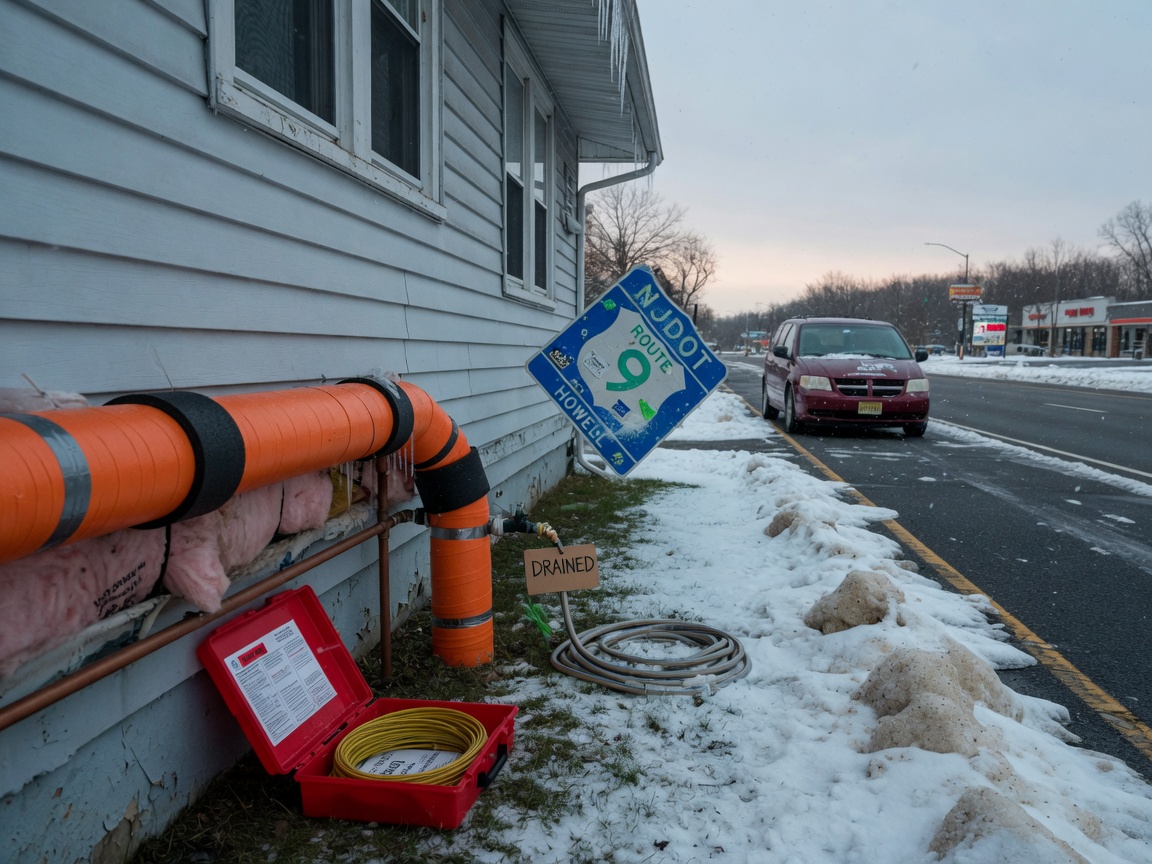
To prevent pipe freezes along Route 9 in Howell, insulate exposed lines in crawl spaces and attics while maintaining indoor temperatures above 55 degrees Fahrenheit during overnight drops below 20 degrees. Route 9 corridors pass through neighborhoods like Squankum and Adelphia where many homes sit on slabs or have unheated garages that expose supply lines to wind chill from the nearby Manasquan Reservoir. Cold winters in Monmouth County pull heat from pipes faster than in milder coastal spots like Wall, so early action avoids bursts that lead to water damage restoration needs.
Route 9 Housing Stock and Freeze Exposure
Homes built along Route 9 in Howell often date from the 1960s through 1980s with copper or galvanized lines running through exterior walls or under raised foundations. These properties sit in flatter terrain near Howell Township Recreation fields where wind tunnels form during January cold fronts. The humid subtropical pattern brings sudden temperature swings after hot summers, leaving soil around foundations saturated and more conductive to heat loss from buried pipes. Residents in Squankum sections report more frequent issues when lines run parallel to the highway without proper sleeves. Checking shutoff valves before the first freeze helps isolate sections quickly if a line does split.
Insulation and Temperature Control Steps
Start by wrapping foam sleeves rated for 1/2-inch and 3/4-inch copper on all visible pipes in basements and garages, focusing on north-facing walls that lose heat fastest. Keep cabinet doors under sinks open during forecasted lows to allow warm air circulation. Set thermostats to 60 degrees even when away, since Route 9 traffic creates microclimates that drop faster than inland Freehold spots. Disconnect and drain outdoor hoses by mid-November to avoid backflow pressure on interior lines. For homes near low-lying areas, add heat tape on supply lines feeding laundry rooms, running it on a timer during sustained cold. These measures cut freeze risk without needing full system replacement.
Monitoring and Early Response
Check attic and crawl space pipes weekly once temperatures dip below 30 degrees, looking for frost lines or reduced water pressure that signals partial blockage. Keep a shutoff map handy near the main valve, especially in Squankum homes where older layouts hide valves behind finished walls. If flow stops suddenly, turn off water at the street and open faucets to relieve pressure before calling for burst pipe water removal. Linking this to broader risks, unchecked leaks can trigger foundation issues detailed in foundation crack repairs triggered by water in Monmouth County. Low-lying Howell spots also face secondary mold growth after thaws, covered in mold risks following flooding in low-lying areas of Howell.
Seasonal Maintenance for Route 9 Properties
Schedule a full line inspection each October before cold arrives, paying attention to sections near the Manasquan Reservoir watershed where groundwater stays higher year-round. Replace any cracked insulation and test heat tape units on a dedicated circuit. In Adelphia sections along Route 9, trees often drop limbs that damage exterior hose bibs, so clear debris early. These habits protect against the cold winters that define the local climate and reduce calls for water damage restoration after a thaw. Blue Dot Restoration remains available Mon–Sun 8am–10pm for questions on specific home layouts.