2026-08-31 · Dan Kowalski
How to Spot Hidden Moisture in Attics After Summer Storms in Howell NJ
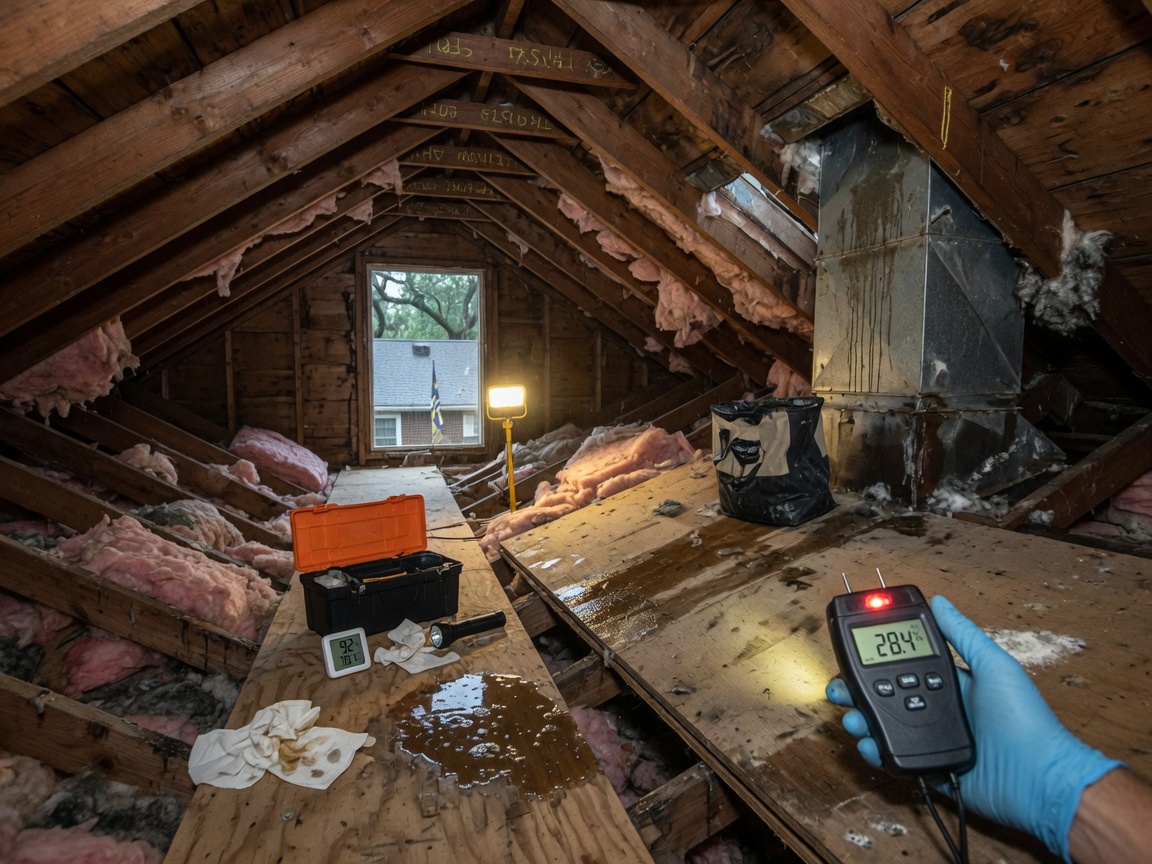
After summer storms hit Howell NJ, hidden moisture in attics often appears within 48 to 72 hours as water seeps through roof penetrations and settles in insulation. Homeowners in Adelphia and Squankum notice musty odors or sagging drywall first, while older homes near the Manasquan Reservoir face extra risk from high humidity and wind-driven rain that pushes water under shingles.
Checking Insulation and Ceiling Surfaces
Start by examining insulation batts or blown-in material for dark spots or clumps that feel heavier than surrounding areas. In Howell Township homes built before 1980, cellulose insulation absorbs water quickly and stays damp for weeks due to the humid subtropical climate. Look for water stains on ceiling drywall that measure 6 to 12 inches across, especially near chimneys or attic vents. Run a gloved hand along rafters to feel for cool, damp patches that indicate trapped moisture from storms. These checks work best on clear days when attic temperatures drop below 80 degrees so condensation does not confuse the results.
Using Basic Tools for Moisture Detection
A pin-type moisture meter gives readings above 18 percent in affected wood or drywall, signaling active moisture that needs extraction. Infrared cameras reveal temperature differences of 5 to 10 degrees where water sits behind insulation near Howell Township Recreation fields. Place the meter probes into insulation at multiple points along the roof deck, focusing on valleys and areas above bathrooms. Record readings in a notebook so you can track whether levels drop over 48 hours or stay elevated. If readings remain high near Squankum, the issue likely traces back to storm-driven water that bypassed flashing.
Common Entry Points in Local Homes
Homes along Route 9 and in Freehold often have roof vents or skylights that allow wind-driven rain to enter during July and August storms. Check around plumbing vents and electrical boxes where gaps form from age and thermal movement in cold winters. In Wall and nearby areas, older asphalt shingles crack after repeated hot summers, letting water reach the attic deck. Pay attention to areas above Howell Township Recreation buildings where tree cover increases leaf debris that clogs gutters and forces water backward under the roof edge.
Preventing Mold Growth After Detection
Once moisture is found, increase attic ventilation by opening ridge vents on days when outdoor humidity stays below 60 percent. Remove wet insulation in sections no larger than 4 by 8 feet to avoid spreading spores. Link to professional Water Damage Restoration if readings exceed 25 percent or if you see black spotting on wood. Monitor the space daily for new odors, and consider Mold Remediation when discoloration appears within 7 to 10 days of the storm. For older Howell properties, review Cost Factors for Water Extraction in Older Howell Township Properties before scheduling work.
Knowing When Professional Help Is Required
If moisture covers more than 10 square feet or affects structural members, contact Blue Dot Restoration at 8am to 10pm any day for assessment. Technicians use commercial dehumidifiers sized at 70 to 150 pints per day to dry attics without warping rafters. Storm-related calls increase after heavy rain near the Manasquan Reservoir because saturated soil raises groundwater levels and pushes moisture upward through foundation vents. Early action prevents the need for larger Storm Damage Restoration later in the season.