
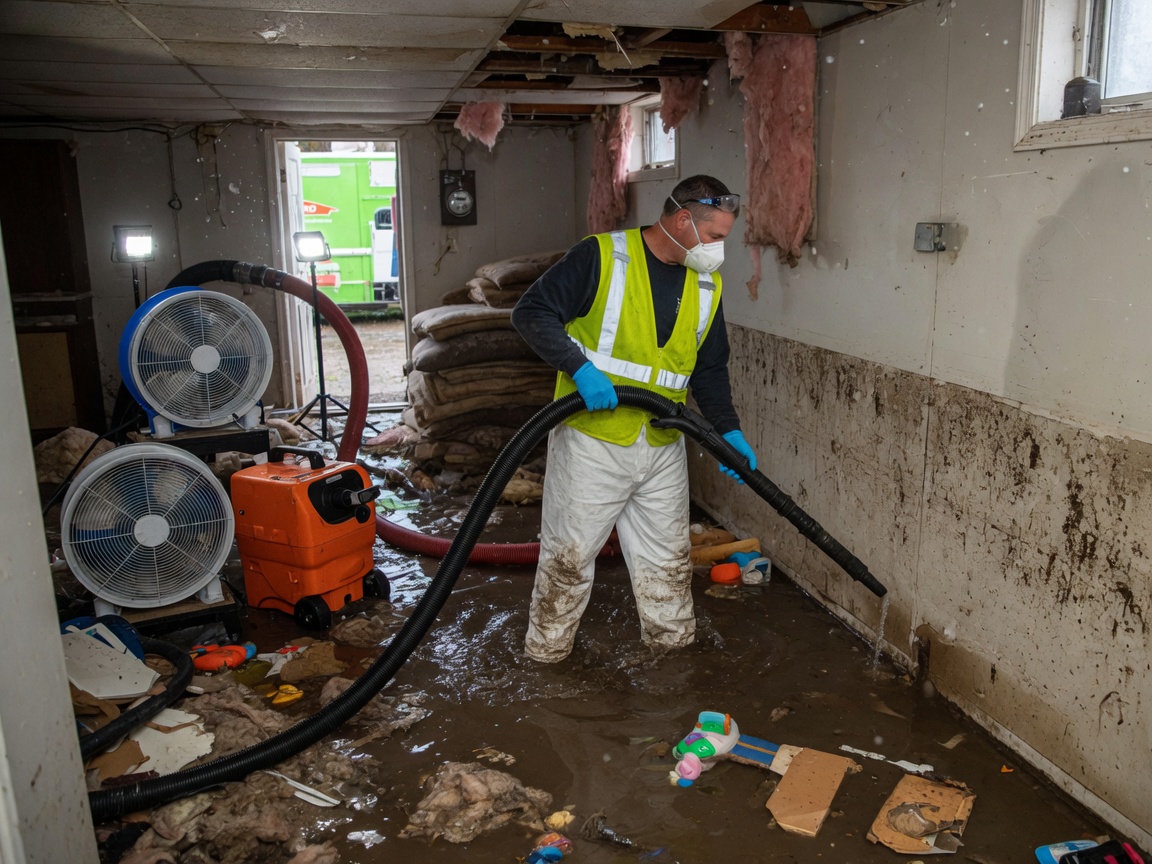
Howell sits in Monmouth County with a humid subtropical climate that brings sudden summer downpours and winter freeze-thaw cycles. Older homes in Squankum and Adelphia often have stone or early block foundations that let water migrate into basements and crawl spaces when the ground around Manasquan Reservoir stays saturated. Flood water here frequently carries silt from nearby fields and can reach finished lower levels in Freehold and Wall border properties within hours.
Extraction must account for the clay-heavy soils that slow natural drainage. Technicians use submersible pumps and moisture meters to locate hidden pockets behind drywall and under slab-on-grade sections common in 1970s-1990s builds. Failure to pull carpet padding and insulation before mold sets in forces larger demolition later, especially after storms that also affect Howell Township Recreation fields and low-lying roads.
Flood Damage Cleanup Near You — Choose Your City
Every city below has its own local Flood Damage Cleanup page with coverage details.
Drying equipment placement changes with the season. In winter, supplemental heat is needed to drive moisture from joists while avoiding frozen lines; in summer, high humidity requires aggressive dehumidification to keep secondary damage from spreading to upper floors. Local codes require permits for any electrical work exposed by flood cuts, and crews coordinate with Howell inspectors before closing walls.
Homeowners in Adelphia often discover that sump pump failures during power outages turn minor seepage into full-room flooding. Proper documentation of affected materials and pre-existing conditions protects insurance claims for properties near the reservoir where water tables fluctuate year-round.
Technician insight
In Howell, the thing that catches most people out with Flood Damage Cleanup is how quickly clay soil around the Manasquan Reservoir keeps basements wet long after the rain stops, especially in 40-year-old homes in Squankum where vapor barriers were never installed.
Adelphia Basement After Summer Storm
Heavy rain overwhelmed a home's French drain near the reservoir and water entered through a cracked foundation wall. We extracted several inches of silt-laden water, removed saturated carpet and insulation, then ran drying equipment for five days until joist moisture returned to normal. The homeowner avoided mold growth and the lower level was ready for new flooring within two weeks.
Flood Damage Cleanup Services We Offer
✓Basement Flood Extraction
Rapid removal of standing water from cellars and crawl spaces common in Squankum and Adelphia homes using truck-mounted pumps and portable units.
✓Storm Water Removal
Cleanup after heavy rainfall and runoff that enters through windows, doors and foundation cracks near Manasquan Reservoir.
✓Sewage-Contaminated Flood Cleanup
Safe extraction and disinfection when flood water mixes with septic or municipal lines in older Monmouth County neighborhoods.
✓Carpet and Pad Removal
Pulling saturated flooring and padding to prevent mold growth in humid summers typical of Howell and nearby Wall.
✓Structural Drying and Dehumidification
Placement of air movers and dehumidifiers to dry joists, subfloors and walls after water intrusion from cold-weather pipe bursts.
✓Contents Cleaning and Relocation
Moving and cleaning salvageable items from flooded rooms in Freehold-border homes before permanent restoration begins.
Flood Damage Cleanup Cost in New Jersey
| Service | Typical Range | What Affects It |
|---|---|---|
| Initial Water Extraction | $600–$1,800 | Varies with depth and access in older Squankum basements |
| Full Structural Drying | $800–$2,200 | Influenced by home size and season near Manasquan Reservoir |
| Sewage-Contaminated Cleanup | $1,200–$3,000 | Higher when disinfection and disposal are required |
| Contents Handling | $300–$900 | Depends on quantity and condition of items moved |
| Final Moisture Verification | $150–$350 | Includes written report for insurance |
Ranges are typical for New Jersey and confirmed with an exact written quote before any work starts.
How it works
- 1
Site Assessment
Technicians inspect water depth, affected materials and hidden moisture using meters while noting proximity to the reservoir or low-lying roads.
- 2
Water Extraction
Pumps and vacuums remove standing water from basements and slabs before it migrates further into Squankum and Adelphia foundations.
- 3
Drying and Monitoring
Equipment runs continuously with daily moisture checks until readings match unaffected areas of the home.
- 4
Sanitizing and Documentation
Antimicrobial treatment is applied where needed and a full report is prepared for insurance and Howell Township requirements.
- 5
Final Walk-Through
Homeowner reviews dried areas and receives guidance on preventing repeat flooding from seasonal rains.
Pricing
Costs depend on water volume, number of affected rooms and whether sewage is present; upfront quotes are provided after the initial assessment.