2026-08-31 · Dan Kowalski
Removing Carpet Odors After Humidity Spikes in Coastal New Jersey
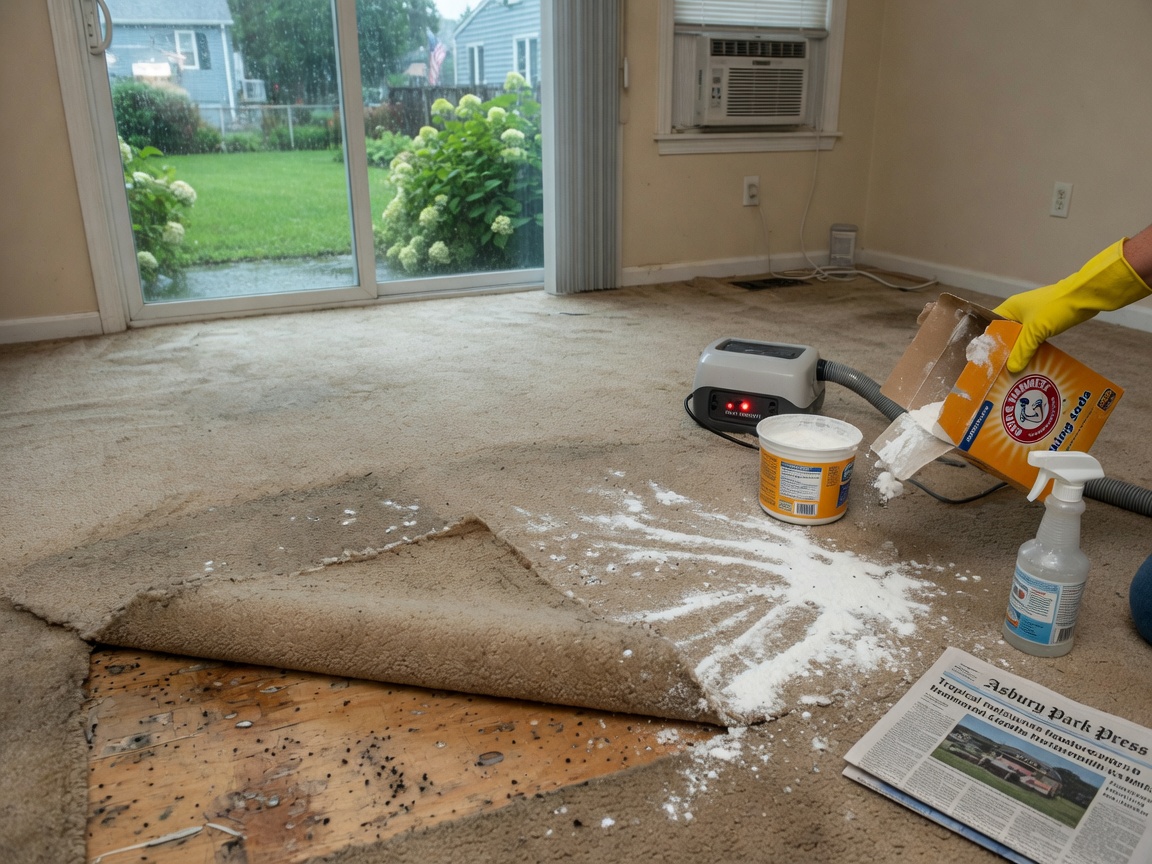
Humidity spikes in coastal New Jersey trap moisture in carpet padding and backing, creating odors that linger for weeks without prompt extraction and airflow control. In Howell, where summers bring high humidity near the Manasquan Reservoir and winters allow condensation in basements, addressing the source within the first 24 hours limits bacterial growth and keeps odors from spreading into subfloors. Homeowners in Squankum and Adelphia often see faster results when they combine professional-grade dehumidifiers with targeted cleaning rather than relying on fans alone.
Humidity Patterns Affecting Howell Carpets
Monmouth County's humid subtropical climate produces repeated humidity spikes from May through September, especially after storms that push moisture inland from the coast toward Freehold and Wall. These conditions hit older ranch and split-level homes in Howell Township hardest because many properties built before 1980 have carpet installed directly over concrete slabs or plywood with limited vapor barriers. When relative humidity climbs above 60 percent for several days, padding absorbs water vapor that standard household vacuums cannot pull out, leaving behind organic residues that feed odor-causing bacteria. Terrain near Howell Township Recreation areas also channels runoff toward lower-lying neighborhoods, increasing the chance that carpets in ground-level rooms stay damp longer than those in elevated sections of Adelphia.
Why Standard Cleaning Fails After Spikes
Retail carpet shampoos and baking-soda treatments only mask surface smells because they do not reach the padding where most moisture collects. In Howell homes, padding often sits 3/8 inch thick and bonds to the backing, so any trapped water creates a hidden reservoir that releases odors every time indoor humidity rises again. Cold winter months compound the problem when heating systems dry the air upstairs while slab floors stay cool, causing condensation that restarts the cycle. Residents who skip extraction after a spike commonly notice the same smell returning within 10–14 days once outdoor humidity climbs back above 55 percent.
Extraction and Drying Sequence That Works
Begin with a truck-mounted extractor to pull standing and absorbed water from both carpet and pad, followed immediately by commercial air movers and dehumidifiers running at 70–80 pints per day capacity. Position equipment to create negative pressure across the affected room so moist air moves toward the units rather than into adjacent hallways. In older Squankum properties, technicians often lift carpet edges every 12 hours to check pad moisture levels with a meter; when readings drop below 12 percent, the pad can usually be saved. Run equipment continuously for 48–72 hours, then apply an enzyme cleaner formulated for organic residues before reinstalling the carpet. This sequence removes the food source for odor bacteria rather than covering it.
When Professional Carpet Water Damage Repair Becomes Necessary
If odors persist after 72 hours of drying or if black staining appears along baseboards, the carpet and pad require full removal to protect subfloor integrity. Properties in Adelphia with original 1970s carpet often need pad replacement because the material has degraded and holds moisture even after extraction. Linking to carpet water damage repair services helps homeowners understand when DIY steps reach their limit. For homes near the reservoir where repeated spikes occur, pairing extraction with mold remediation prevents spores from settling into drywall. Checking cost factors for water extraction in older Howell Township properties gives realistic expectations before work begins. Business hours at Blue Dot Restoration run Mon–Sun 8am–10pm for emergency response after sudden humidity events.