2026-08-31 · Dan Kowalski
Drying Hardwood Floors Damaged by Appliance Leaks in Howell Kitchens
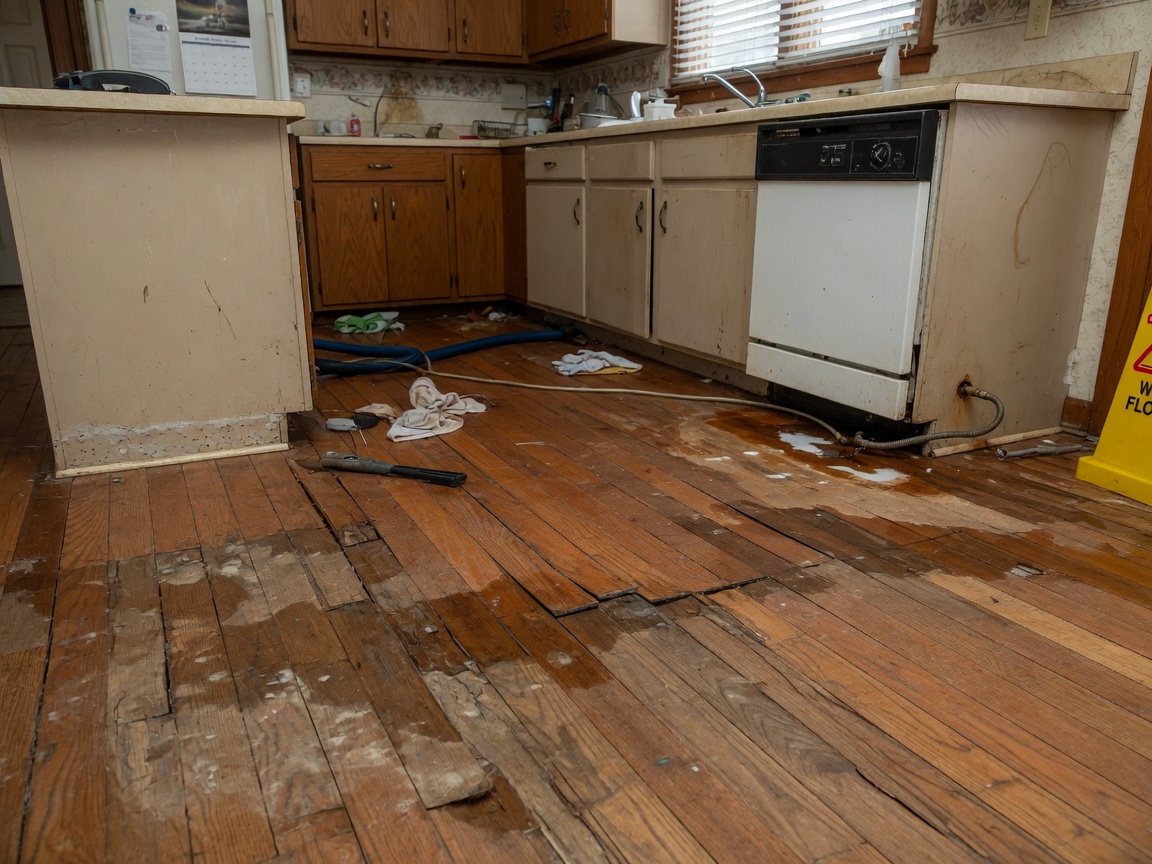
Appliance leaks in Howell kitchens typically require 7–14 days of professional drying for hardwood floors before refinishing can begin, though thicker planks or prolonged exposure near Adelphia or Squankum may extend that window due to deeper moisture penetration in older Monmouth County homes.
Assessing Leak Sources and Floor Impact
Kitchens in Howell homes built before the 1980s often feature solid oak or maple floors installed over plywood subfloors that absorb water quickly from dishwasher or refrigerator lines. Leaks near the Manasquan Reservoir area face higher groundwater influence, while properties close to Howell Township Recreation fields deal with seasonal runoff that raises indoor humidity. Start by isolating the appliance, then use moisture meters to map affected boards—cupping usually appears first along edges where water pools under cabinets. In humid subtropical conditions with hot summers, surface drying happens fast but trapped moisture below the finish can lead to mold within 48 hours if not extracted.
Initial Water Removal Steps
Remove standing water immediately with a wet vac rated for 5–10 gallons per minute, focusing on seams where appliances meet the floor. For small leaks under 40-gallon water heaters or ice makers, lift baseboards to create airflow paths without damaging trim. Homeowners in Freehold or Wall often notice warping within hours during cold winter snaps when indoor heating drives moisture upward. Avoid fans alone because they can spread spores; instead combine extraction with air movers aimed at 45-degree angles across the grain. This approach prevents the uneven shrinkage common in Squankum’s older ranch-style homes where floors sit directly on concrete slabs.
Controlled Drying Equipment and Timelines
Professional drying relies on low-grain refrigerant dehumidifiers pulling 70–100 pints per day paired with axial fans moving 3,000–5,000 cubic feet per minute. In Howell’s humid summers, maintain 35–45% relative humidity inside containment zones for the full 7–14 day cycle. Check moisture content daily with pin meters targeting 12% or lower in the hardwood before stopping equipment. Properties near the reservoir experience slower drying because ambient air already carries extra moisture, requiring additional desiccant units. Never rush with heat alone, as rapid temperature swings in winter can crack boards that have already expanded from the leak.
Addressing Hidden Moisture and Mold Risks
Check subfloors and adjacent drywall for hidden saturation, especially under sinks where leaks travel along joists toward exterior walls. Appliance leak cleanup services often include thermal imaging to locate pockets missed by visual inspection. In older Howell Township homes, gaps between hardwood and cabinets trap water that later fuels mold when humidity spikes. If readings stay above 16% after five days, consider temporary removal of a few boards to expose the subfloor. Linking this process to broader water damage restoration prevents secondary issues like those detailed in discussions of hidden moisture after summer storms.
Refinishing and Long-Term Prevention
Once moisture content stabilizes, sand only the damaged boards to 80–120 grit before applying two coats of water-based polyurethane rated for 40–50 square feet per quart. Homeowners near Freehold benefit from quarterly inspections of supply lines, replacing rubber hoses every 8–12 years to avoid repeat leaks. During cold winters, maintain consistent 68–72°F indoor temperatures to reduce condensation on cold floors. For larger jobs involving multiple rooms, review cost factors for water extraction in older Howell Township properties to understand variables like plank thickness and access constraints. Blue Dot Restoration remains available Mon–Sun 8am–10pm to guide these steps on-site.