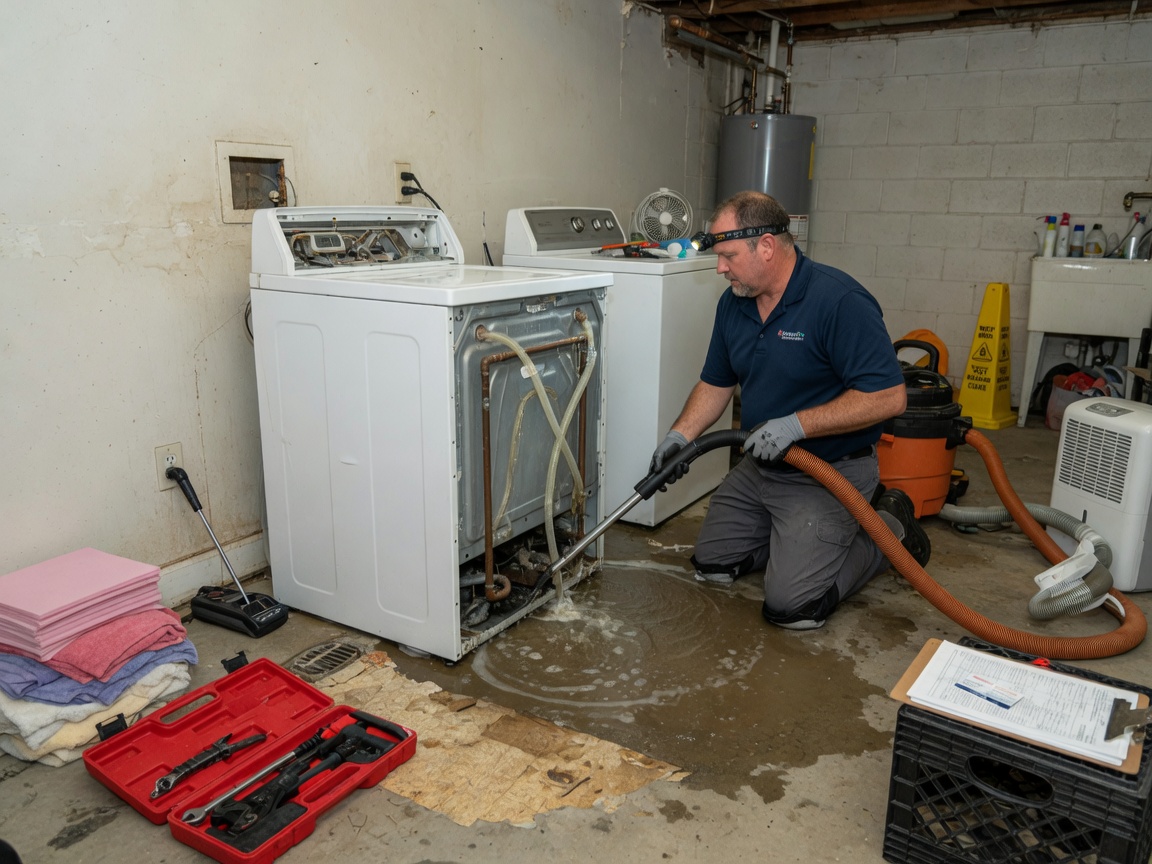
Appliance leaks in Howell often start small but spread quickly through older slab foundations common in Adelphia and Squankum. Washing machines, refrigerators, and dishwashers connected to aging supply lines can release gallons before detection, especially during humid summer months when indoor moisture levels stay elevated. Technicians use moisture meters and infrared cameras to trace water that travels under flooring or into wall cavities before visible signs appear. Prompt removal prevents secondary issues like warped subfloors or hidden mold growth that thrives in the region's humid subtropical climate.
Cold winter temperatures in Monmouth County can cause supply lines to contract and leak at connections behind appliances. In homes near Manasquan Reservoir or Howell Township Recreation areas, many properties sit on clay-heavy soils that slow natural drainage, trapping water longer under structures. Cleanup crews extract standing water with portable pumps, then deploy air movers and dehumidifiers sized for the space. Edge cases include leaks that reach electrical outlets or HVAC returns, requiring coordination to avoid code violations during drying. Every job includes documentation of affected materials so homeowners can review before any further work.
Appliance Leak Cleanup Near You — Choose Your City
Every city below has its own local Appliance Leak Cleanup page with coverage details.
Homeowners in Freehold and Wall often discover appliance leaks after water migrates into finished basements. Blue Dot Restoration focuses on source isolation first, shutting valves and containing the area to limit spread. Technicians remove saturated carpet pads and baseboards when needed, then monitor drying with daily moisture readings. This approach accounts for the mix of ranch-style and split-level homes prevalent in Howell, where appliance placement near exterior walls increases the chance of water exiting through siding. Work stops only after readings confirm the structure is dry enough to avoid callbacks.
Technician insight
In Howell the thing that catches most people out with appliance leak cleanup is how quickly water travels under the slab in older Adelphia and Squankum homes; the clay soil holds moisture longer than people expect, so we often end up running equipment an extra day or two even when the visible puddle looks small.
Refrigerator line leak into finished basement
Water from a cracked ice-maker line reached the finished basement in a Squankum ranch. We mapped moisture behind the finished wall, extracted standing water, and ran drying equipment for three days until readings stabilized. The homeowner avoided mold growth and kept the original flooring.
Appliance Leak Cleanup Services We Offer
✓Washing Machine Leak Extraction
Removes water from overflows or supply line failures and dries affected flooring and walls before mold sets in.
✓Dishwasher Overflow Cleanup
Extracts water from door seal or drain line failures and treats adjacent cabinetry and subfloors in Howell kitchens.
✓Refrigerator Water Line Drying
Addresses leaks from ice maker or filter lines, using targeted drying to protect nearby finished surfaces and prevent hidden moisture pockets.
✓Stove and Range Leak Remediation
Handles water intrusion from connected gas or electric lines and restores surrounding flooring without disturbing appliance connections.
✓Appliance Leak Moisture Mapping
Uses meters and cameras to locate water that has traveled into walls or under slabs common in Squankum and Adelphia homes.
Appliance Leak Cleanup Cost in New Jersey
| Service | Typical Range | What Affects It |
|---|---|---|
| Small appliance leak extraction | $250–$450 | Limited to one room, no hidden wall damage |
| Full kitchen or laundry room drying | $600–$950 | Multiple rooms, subfloor involvement |
| Moisture mapping add-on | $150–$250 | Infrared and meter readings for slab or wall migration |
| Extended drying monitoring | $100–$200 per day | Required when humidity stays high after initial extraction |
Ranges are typical for New Jersey and confirmed with an exact written quote before any work starts.
How it works
- 1
On-Site Assessment
Technician inspects the appliance, traces water paths, and checks humidity levels in surrounding rooms.
- 2
Water Extraction
Standing water is removed with pumps and wands, followed by removal of saturated materials that cannot be saved.
- 3
Drying and Monitoring
Air movers and dehumidifiers run until moisture readings return to normal, with daily checks in humid Howell conditions.
- 4
Final Walk-Through
Homeowner reviews dried areas and receives notes on any materials that may need replacement later.
Pricing
Upfront quotes provided on site after assessment; final cost depends on water volume, materials affected, and drying time required.