
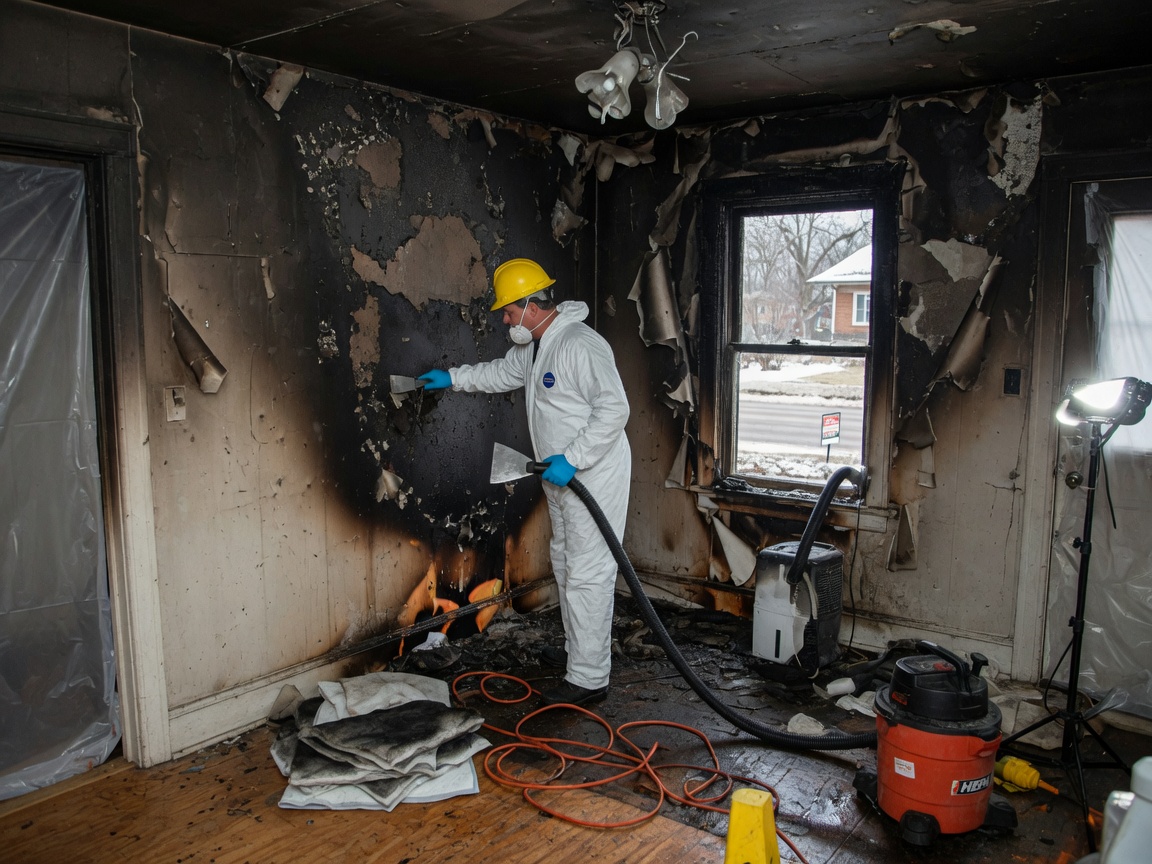
Homes in Adelphia and Squankum often feature older wood framing and plaster walls from the mid-20th century that trap smoke particles deep in cavities when fires occur. Humid subtropical summers accelerate corrosion on metal fixtures and wiring after the initial burn, while cold winter nights cause rapid condensation that sets soot into porous surfaces like carpet and insulation. Firefighters drawing water from nearby Manasquan Reservoir or Howell Township Recreation ponds frequently introduce additional moisture that leads to hidden mold growth behind baseboards within days. Proper restoration requires removing affected drywall sections rather than surface cleaning alone to prevent recurring odors.
Monmouth County building codes require permits for any structural work exceeding minor repairs, especially in areas near Freehold and Wall where older septic systems and shallow foundations complicate access. Soot from common kitchen or electrical fires travels through HVAC ducts in ranch-style homes prevalent here, spreading to every room even when the fire stays contained. Technicians must test for pH levels on surfaces before sealing because acidic residue from burned synthetics can damage new finishes. Winter temperature swings between heated interiors and frozen exteriors make timing critical to avoid cracking in remaining materials during cleanup.
Fire Damage Restoration Near You — Choose Your City
Every city below has its own local Fire Damage Restoration page with coverage details.
Local terrain with clay-heavy soils around Squankum slows drainage after suppression efforts, leaving standing water under crawl spaces that combines with smoke residue to create persistent musty smells. Restoration crews inspect attic insulation thoroughly because blown-in cellulose holds odors longer than fiberglass in the region's high summer humidity. Homeowners in these neighborhoods often overlook secondary damage to electrical panels located in basements, where soot can cause future shorts if not addressed during the initial response.
Technician insight
In Howell, the thing that catches most people out with Fire Damage Restoration is how quickly smoke travels through the ductwork of 1970s ranch homes in Squankum during winter when furnaces run constantly, then mixes with moisture from cold air infiltration under the slab.
Kitchen Fire in Adelphia Home
A small kitchen fire spread smoke through the HVAC in a 1978 ranch near Howell Township Recreation. Inspection showed soot in every duct and moisture under the crawl space from suppression water. Crews removed affected insulation, cleaned the system, and dried the subfloor before odors set in the humid conditions.
Fire Damage Restoration Services We Offer
✓Smoke Odor Removal
Targets embedded smoke particles in drywall, insulation, and HVAC systems common in Howell ranch homes using thermal fogging and air scrubbing.
✓Soot Surface Cleaning
Removes acidic soot from walls, ceilings, and contents before it causes permanent etching on painted surfaces in older Adelphia properties.
✓Structural Fire Damage Repair
Replaces charred framing and subfloors while meeting Monmouth County permit requirements for homes near Manasquan Reservoir.
✓Content Cleaning and Restoration
Cleans and deodorizes furniture, clothing, and documents affected by smoke migration through Squankum and Howell Township homes.
✓Fire and Water Combined Restoration
Addresses moisture from suppression efforts that leads to secondary water damage in basements common throughout Monmouth County.
Fire Damage Restoration Cost in New Jersey
| Service | Typical Range | What Affects It |
|---|---|---|
| Smoke Odor Treatment | $800–$2,500 | Depends on number of rooms and HVAC involvement |
| Soot Removal Per Room | $300–$700 | Higher for older plaster walls in Adelphia homes |
| Structural Board-Up | $400–$1,200 | Varies with home size and weather exposure |
| Content Cleaning | $500–$1,800 | Based on item count and smoke penetration |
Ranges are typical for New Jersey and confirmed with an exact written quote before any work starts.
How it works
- 1
Initial Assessment
Inspect all affected areas including attics and crawl spaces for hidden smoke and moisture in Howell homes.
- 2
Containment And Safety
Set up barriers and test for hazardous residues before starting removal work.
- 3
Cleaning And Removal
Extract soot, clean surfaces, and remove irreparably damaged materials.
- 4
Drying And Deodorizing
Apply drying equipment and odor treatments suited to local humidity levels.
- 5
Final Inspection
Verify clearance and prepare surfaces for any needed reconstruction.
Pricing
Upfront quotes provided after inspection; costs vary with fire size and hidden damage.