
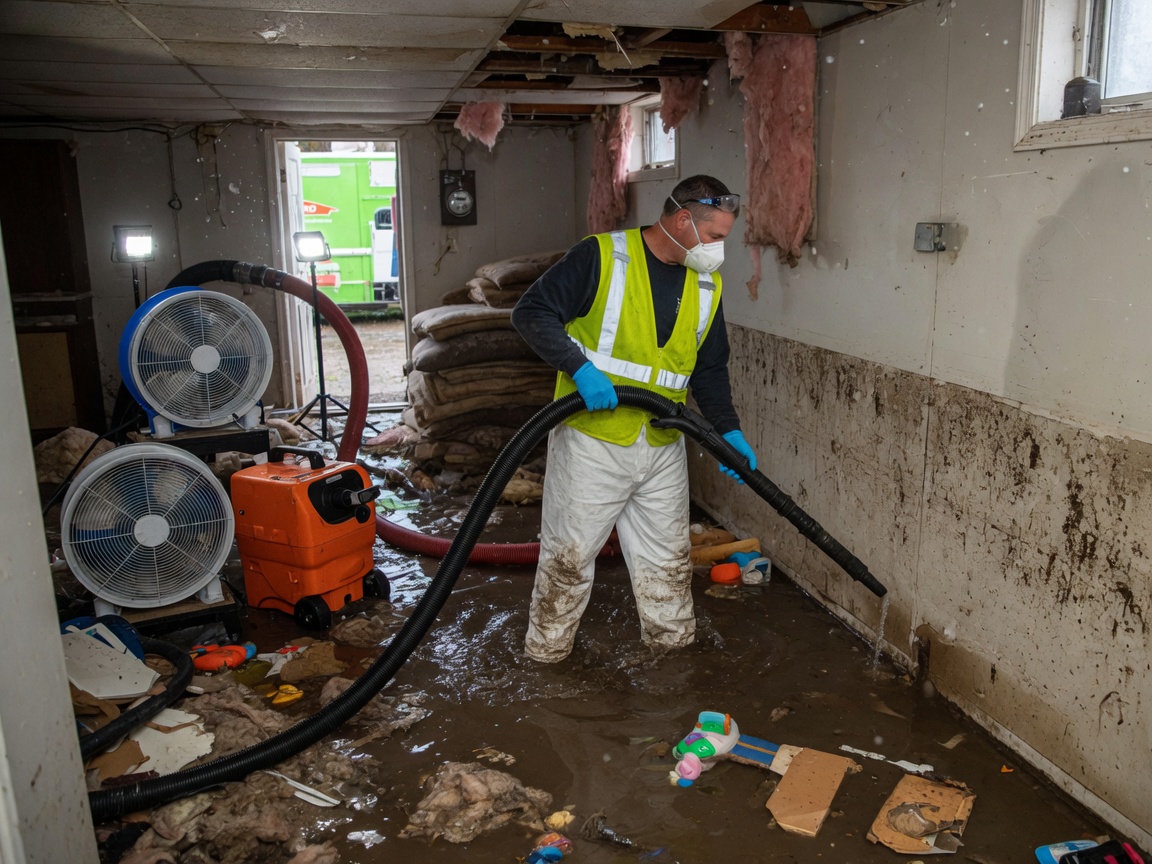
Flood damage cleanup in Toms River starts with homes near the beaches and Cattus Island County Park where storm surges and runoff from NJ-37 and NJ-70 push water into basements during humid summer rains. Crews extract standing water quickly before mild winters allow hidden moisture to spread mold through older single-family housing stock around the Ocean County Courthouse. Blue Dot Restoration NJ crews based in Howell arrive within hours to handle these coastal failures that differ from inland jobs because saltwater and high humidity accelerate damage to drywall and flooring.
Flood Damage Cleanup in Toms River — What We Handle
- ✓Saltwater from beach surges requires neutralization steps not typical farther inland.
- ✓Elevated beach homes still see wind-driven rain intrusion through windows and vents.
- ✓High local humidity turns leftover moisture into mold within days after Garden State Parkway flooding events.
Flood Damage Cleanup Services We Offer in Toms River
✓Basement Flood Extraction
Rapid removal of standing water from cellars and crawl spaces common in Squankum and Adelphia homes using truck-mounted pumps and portable units.
✓Storm Water Removal
Cleanup after heavy rainfall and runoff that enters through windows, doors and foundation cracks near Manasquan Reservoir.
✓Sewage-Contaminated Flood Cleanup
Safe extraction and disinfection when flood water mixes with septic or municipal lines in older Monmouth County neighborhoods.
✓Carpet and Pad Removal
Pulling saturated flooring and padding to prevent mold growth in humid summers typical of Howell and nearby Wall.
✓Structural Drying and Dehumidification
Placement of air movers and dehumidifiers to dry joists, subfloors and walls after water intrusion from cold-weather pipe bursts.
✓Contents Cleaning and Relocation
Moving and cleaning salvageable items from flooded rooms in Freehold-border homes before permanent restoration begins.
Howell sits in Monmouth County with a humid subtropical climate that brings sudden summer downpours and winter freeze-thaw cycles. Older homes in Squankum and Adelphia often have stone or early block foundations that let water migrate into basements and crawl spaces when the ground around Manasquan Reservoir stays saturated. Flood water here frequently carries silt from nearby fields and can reach finished lower levels in Freehold and Wall border properties within hours.
Extraction must account for the clay-heavy soils that slow natural drainage. Technicians use submersible pumps and moisture meters to locate hidden pockets behind drywall and under slab-on-grade sections common in 1970s-1990s builds. Failure to pull carpet padding and insulation before mold sets in forces larger demolition later, especially after storms that also affect Howell Township Recreation fields and low-lying roads.
How It Works in Toms River
- 1
Site Assessment
Technicians inspect water depth, affected materials and hidden moisture using meters while noting proximity to the reservoir or low-lying roads.
- 2
Water Extraction
Pumps and vacuums remove standing water from basements and slabs before it migrates further into Squankum and Adelphia foundations.
- 3
Drying and Monitoring
Equipment runs continuously with daily moisture checks until readings match unaffected areas of the home.
- 4
Sanitizing and Documentation
Antimicrobial treatment is applied where needed and a full report is prepared for insurance and Howell Township requirements.
- 5
Final Walk-Through
Homeowner reviews dried areas and receives guidance on preventing repeat flooding from seasonal rains.
Serving All of Toms River
We regularly handle flood damage cleanup jobs near:
- 📍Ocean County Courthouse
- 📍Cattus Island County Park
- 📍Downtown Toms River
- 📍Toms River waterfront
Flood Damage Cleanup Pricing in Toms River
Costs depend on water volume, number of affected rooms and whether sewage is present; upfront quotes are provided after the initial assessment.
Want the full picture of this service? See our Flood Damage Cleanup page, or everything we do in Toms River, NJ.