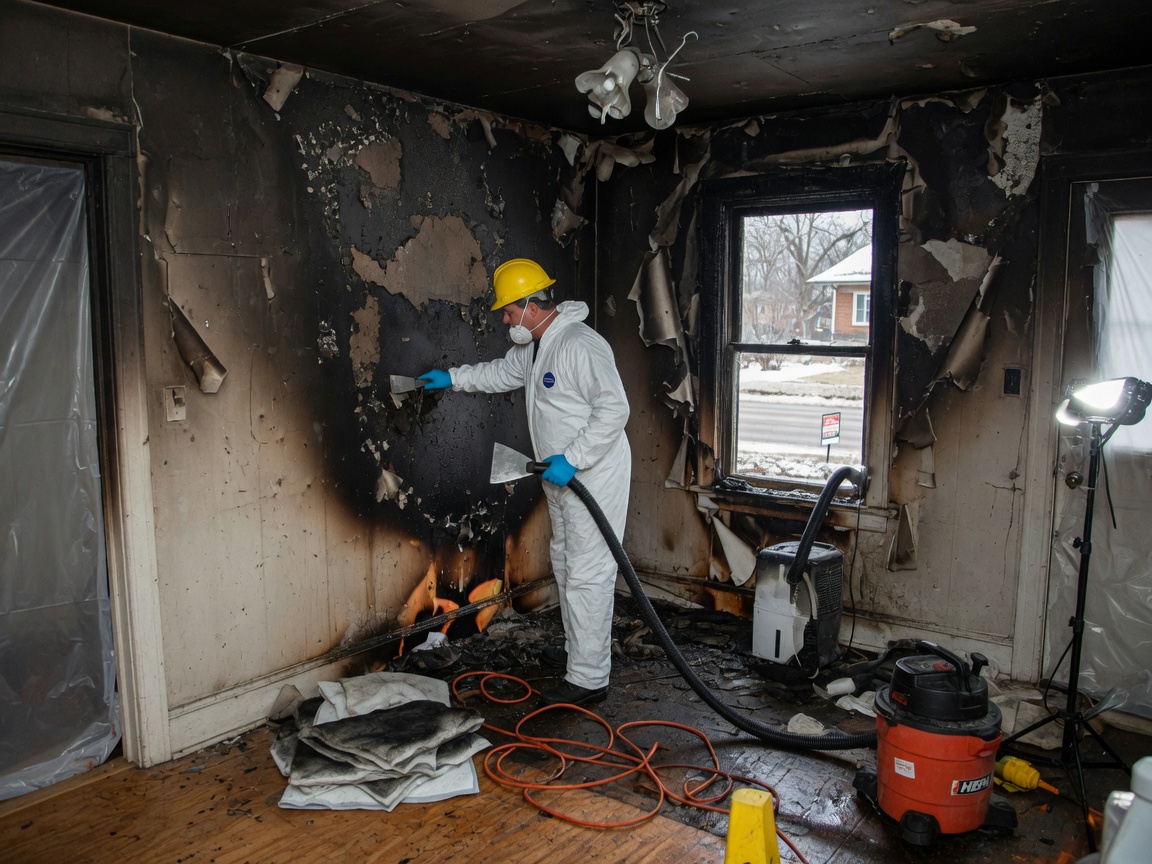
North Bergen’s attached multi-family homes along US-1 and NJ-495 often see fire spread through shared walls, requiring crews to isolate units quickly before soot migrates into neighboring properties. Winters bring rapid condensation on charred surfaces from Hudson River humidity, while summer heat spikes electrical failures in older wiring common to the area’s brick and frame stock. Restoration near James J. Braddock North Hudson County Park demands contained negative-air setups so debris does not reach park grounds or the riverfront.
Fire Damage Restoration in North Bergen — What We Handle
- ✓Tight lots between NJ-3 and the Hudson River limit staging space, so teams use compact HEPA units instead of full-size trailers.
- ✓Cold snaps extend drying times for water used in suppression, increasing corrosion risk inside wall cavities of pre-war buildings.
- ✓Proximity to New York City traffic means response routes via NJ-495 can be delayed, so local crews pre-position equipment in Howell for same-day arrival.
Homes in Adelphia and Squankum often feature older wood-frame construction and lath-and-plaster walls that trap soot deep into cavities. After a fire, these materials require targeted demolition rather than surface cleaning to prevent recurring odors. Cold winter temperatures in Monmouth County slow drying of water introduced by firefighters, raising the risk of hidden mold behind baseboards and under subfloors near the Manasquan Reservoir.
Howell Township Recreation areas and nearby Freehold properties frequently sit on clay-heavy soils that retain moisture after suppression efforts. This terrain condition forces restoration crews to extract water from crawl spaces using specialized pumps before drywall replacement can begin. Failure to address trapped moisture in these soils commonly leads to warped flooring weeks after the initial response.
How It Works in North Bergen
- 1
Emergency Assessment
Technicians inspect the property in Howell for structural safety, soot depth, and water from suppression, focusing on crawl spaces and attics.
- 2
Water Removal
Extract standing water introduced during firefighting, especially in clay soils around the Manasquan Reservoir area.
- 3
Soot And Odor Treatment
Clean affected surfaces and neutralize odors using methods effective against acidic residue from local synthetic materials.
- 4
Rebuild And Final Dry
Replace damaged materials and confirm moisture levels meet standards before returning the home to pre-loss condition.
Fire Damage Restoration Services We Offer in North Bergen
✓Soot and Smoke Removal
Removes embedded soot from porous surfaces like drywall and insulation using specialized equipment to stop permanent staining and odors.
✓Post-Fire Water Extraction
Extracts water from firefighting efforts in basements and crawl spaces common in Squankum homes to prevent secondary mold growth.
✓Odor Neutralization
Applies thermal fogging and ozone treatments to neutralize smoke smells trapped in older plaster walls throughout Adelphia properties.
✓Content Cleaning and Restoration
Cleans salvageable furnishings and documents affected by smoke while documenting items for insurance in Monmouth County homes.
✓Structural Drying and Dehumidification
Uses industrial drying equipment suited to humid subtropical conditions to restore moisture levels after fire-related water intrusion.
Serving All of North Bergen
We regularly handle fire damage restoration jobs near:
- 📍James J. Braddock North Hudson County Park
- 📍Hudson River
- 📍Woodcliff
- 📍New Durham
- 📍Grantwood
Fire Damage Restoration Pricing in North Bergen
Pricing varies by fire size, materials affected, and water volume introduced during suppression; upfront written quotes provided after inspection.
Want the full picture of this service? See our Fire Damage Restoration page, or everything we do in North Bergen, NJ.