2026-08-31 · Dan Kowalski
Protecting Electrical Systems During Water Intrusion in Howell Garages
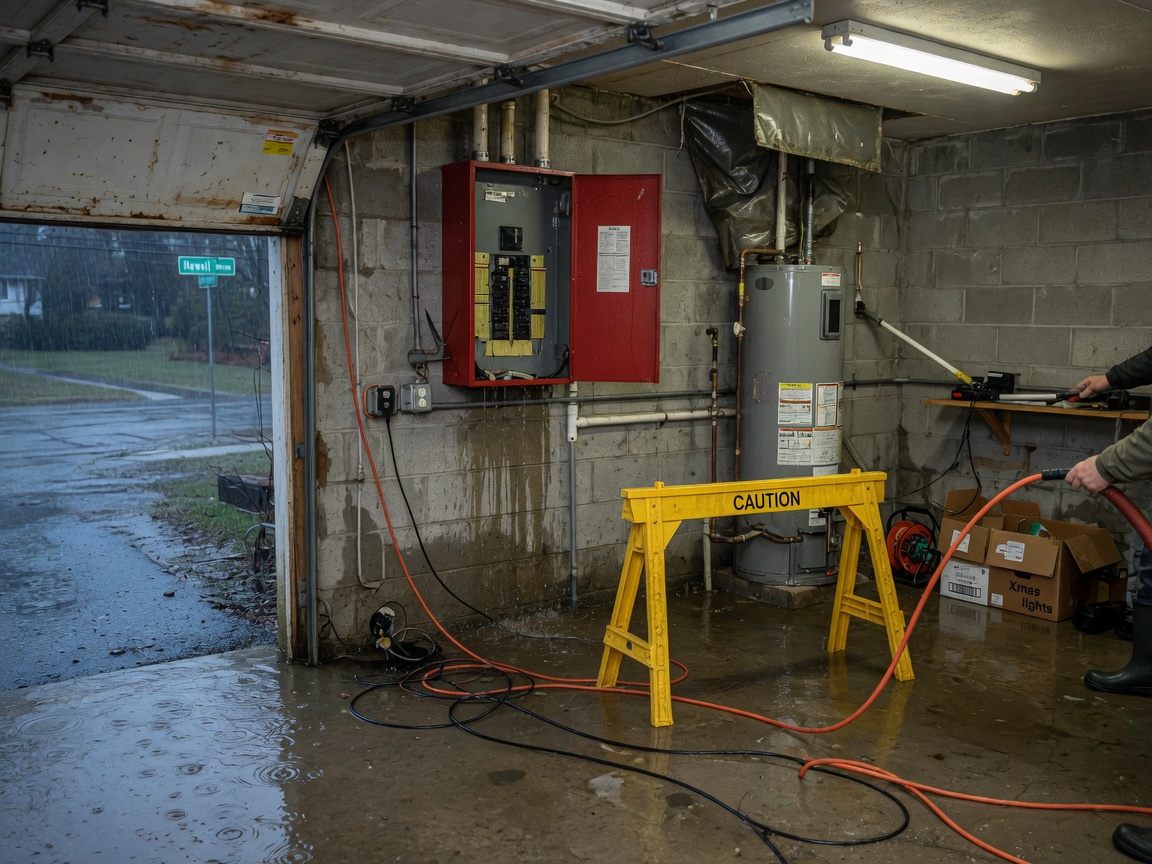
Shutting off power at the main panel and calling a restoration team within the first hour prevents most electrical hazards when water enters a Howell garage. This approach addresses the humid subtropical climate that brings sudden winter freezes and summer downpours capable of pushing water under doors and through foundation cracks common in homes built before 1980 in Squankum and Adelphia.
Immediate Safety Steps
Homeowners in Howell should first locate the main breaker outside the wet zone and flip it off before any inspection. Standing water near outlets or the panel in attached garages often connects to older knob-and-tube wiring still present in many Monmouth County properties near the Manasquan Reservoir. Avoid using any switches or appliances until a technician confirms isolation. Document the water source and depth with photos for insurance while waiting for help. Blue Dot Restoration remains available Mon–Sun 8am–10pm to respond to these calls and coordinate safe entry.
Local Causes of Garage Water Intrusion
Cold winters along Route 9 frequently cause supply lines in unheated garages to burst, sending water across concrete floors toward electrical boxes mounted low on walls. Summer storms that drop several inches in an hour can overwhelm grading around homes in Freehold and Wall, allowing runoff to enter through garage thresholds. Attached garages in Squankum often share walls with finished basements, so moisture migrates upward and reaches wiring within hours. These patterns differ from newer construction because older slabs lack modern vapor barriers.
Assessing Electrical Risks After Intrusion
Once power is confirmed off, check for discoloration or corrosion on outlets and conduit runs that sit within six inches of the floor slab. In Howell garages, aluminum wiring installed in the 1970s reacts faster to moisture than copper, increasing resistance and heat risk even after drying. Use a moisture meter on nearby drywall and framing to map the affected zone before any fans start. Hidden moisture behind panels can remain for weeks in the county’s humid air, leading to arcing later. Water Damage Restoration teams measure these levels on site to decide whether outlets need replacement.
Drying and Restoration Practices
Technicians begin with extraction using truck-mounted equipment sized for 500-square-foot garage slabs typical in Howell. They then place air movers and dehumidifiers calibrated for the cold-winter humidity loads that slow evaporation. Electrical components receive separate treatment: outlets are removed, wiring is tested for continuity, and panels are cleaned with non-conductive solutions. Emergency Water Extraction focuses on pulling water away from live lines first. Final verification includes infrared scans to confirm no residual moisture remains near junction boxes.
Prevention Steps for Howell Homes
Install a battery-backed sump pump with an alarm in garages that sit below street grade near Howell Township Recreation fields. Seal expansion joints and thresholds with polyurethane caulk rated for freeze-thaw cycles common in Monmouth County. Elevate new outlets to 18 inches and use GFCI protection on all garage circuits. Review Winter Pipe Freeze Prevention Tips for Homes Along Route 9 in Howell for additional pipe insulation details. After any event, schedule a follow-up inspection before restoring full power.