
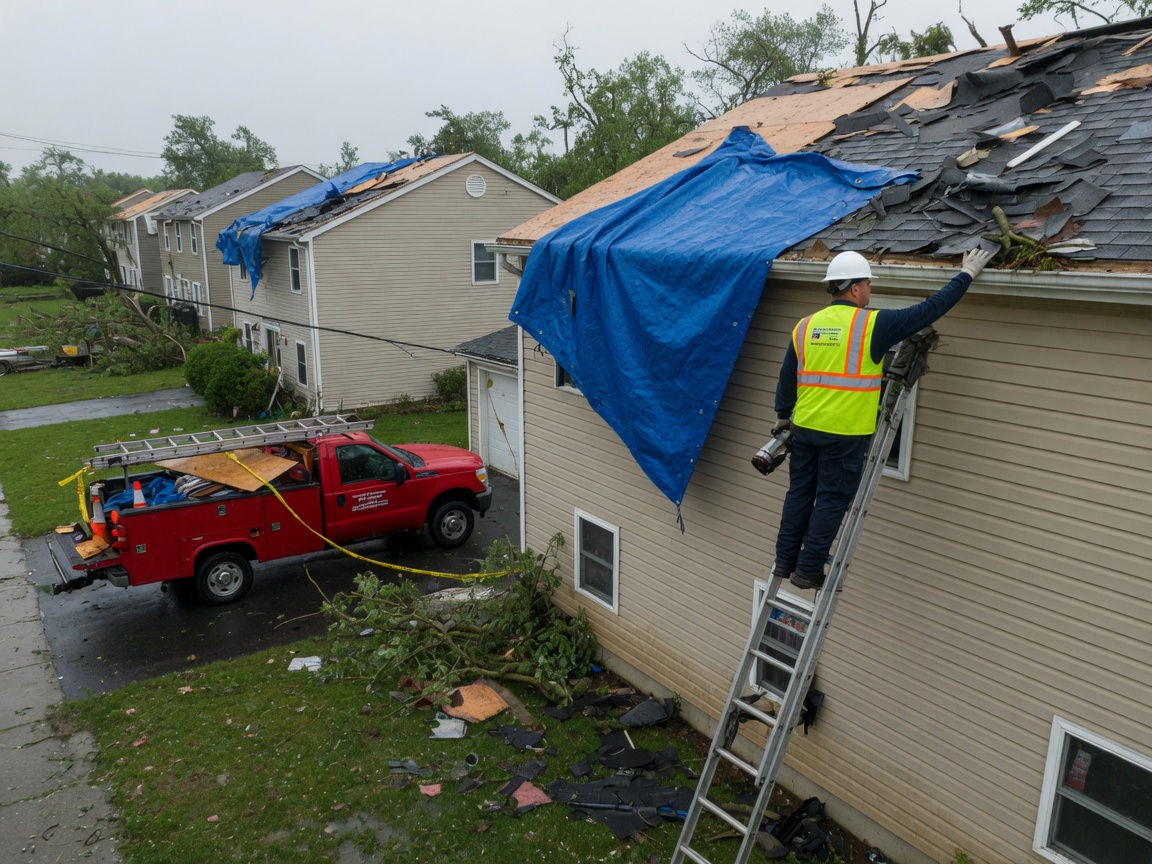
Toms River homes near the beaches and Cattus Island County Park face repeated roof breaches and first-floor flooding when nor'easters push water inland from Barnegat Bay. Properties clustered around the Ocean County Courthouse and along NJ-70 often show water intrusion through aging siding and flat roofs after high-wind events. Crews based in Howell must stage equipment quickly on the Garden State Parkway corridor before residual moisture freezes during the area's mild winters.
Storm Damage Restoration in Toms River — What We Handle
- ✓Salt-laden air near the coast accelerates corrosion on HVAC systems and electrical panels after storm flooding.
- ✓Narrow residential streets off NJ-37 limit large-equipment access, requiring smaller extraction units.
- ✓Proximity to the county seat means many 1960s-1980s homes with slab foundations that trap water under finished floors.
Howell sits in Monmouth County with older ranch and split-level homes in Adelphia and Squankum that often have crawl spaces or partial basements built before modern drainage codes. Nor'easters and summer thunderstorms dump heavy rain that runs off Manasquan Reservoir slopes and overwhelms older gutters and downspouts, pushing water under siding and into finished lower levels. Ice dams form during cold winters when snow melts and refreezes, forcing water behind shingles and into attics. These conditions require extraction equipment sized for the volume of water typical in this terrain rather than standard residential pumps.
Wind-driven rain during coastal storms frequently breaches window seals and vinyl siding joints on homes near Howell Township Recreation fields where open land allows gusts to accelerate. Once water enters wall cavities it travels along the paper-faced insulation common in 1970s-1990s builds, creating hidden saturation that shows up weeks later as ceiling stains. Restoration crews must open walls at multiple elevations to confirm drying rather than relying on surface readings alone. Freehold and Wall border properties share the same soil and elevation patterns, so crews often stage equipment across these lines when multiple homes are affected in one event.
How It Works in Toms River
- 1
On-Site Assessment
Technician inspects roof, siding, and lower levels for water entry points created by the specific storm event.
- 2
Water Extraction
Remove standing water and saturated materials using pumps sized for local soil and drainage conditions.
- 3
Structural Drying
Place air movers and dehumidifiers, then monitor moisture levels in walls, floors, and subflooring over multiple days.
- 4
Repairs And Restoration
Replace damaged drywall, insulation, and flooring while addressing any electrical or structural issues found during drying.
Storm Damage Restoration Services We Offer in Toms River
✓Roof and Attic Leak Restoration
Locate and dry storm-driven water that enters through damaged shingles or ice dams common on older Howell roofs after nor'easters.
✓Basement and Crawl Space Flood Extraction
Remove standing water from partial basements and crawl spaces typical in Adelphia and Squankum homes after heavy Monmouth County rains.
✓Siding and Window Breach Drying
Open and dry wall cavities where wind-driven rain pushes past siding joints near open areas like Howell Township Recreation.
✓Debris and Sediment Removal
Clear mud, leaves, and reservoir silt that storm runoff deposits against foundations in lower-lying Squankum properties.
✓Post-Storm Mold Containment
Contain and treat moisture trapped behind insulation after summer thunderstorms before it spreads in humid Howell conditions.
Serving All of Toms River
We regularly handle storm damage restoration jobs near:
- 📍Ocean County Courthouse
- 📍Cattus Island County Park
- 📍Downtown Toms River
- 📍Toms River waterfront
Storm Damage Restoration Pricing in Toms River
Pricing varies by storm intensity, square footage affected, and whether hidden wall or crawl space drying is required.
Want the full picture of this service? See our Storm Damage Restoration page, or everything we do in Toms River, NJ.