
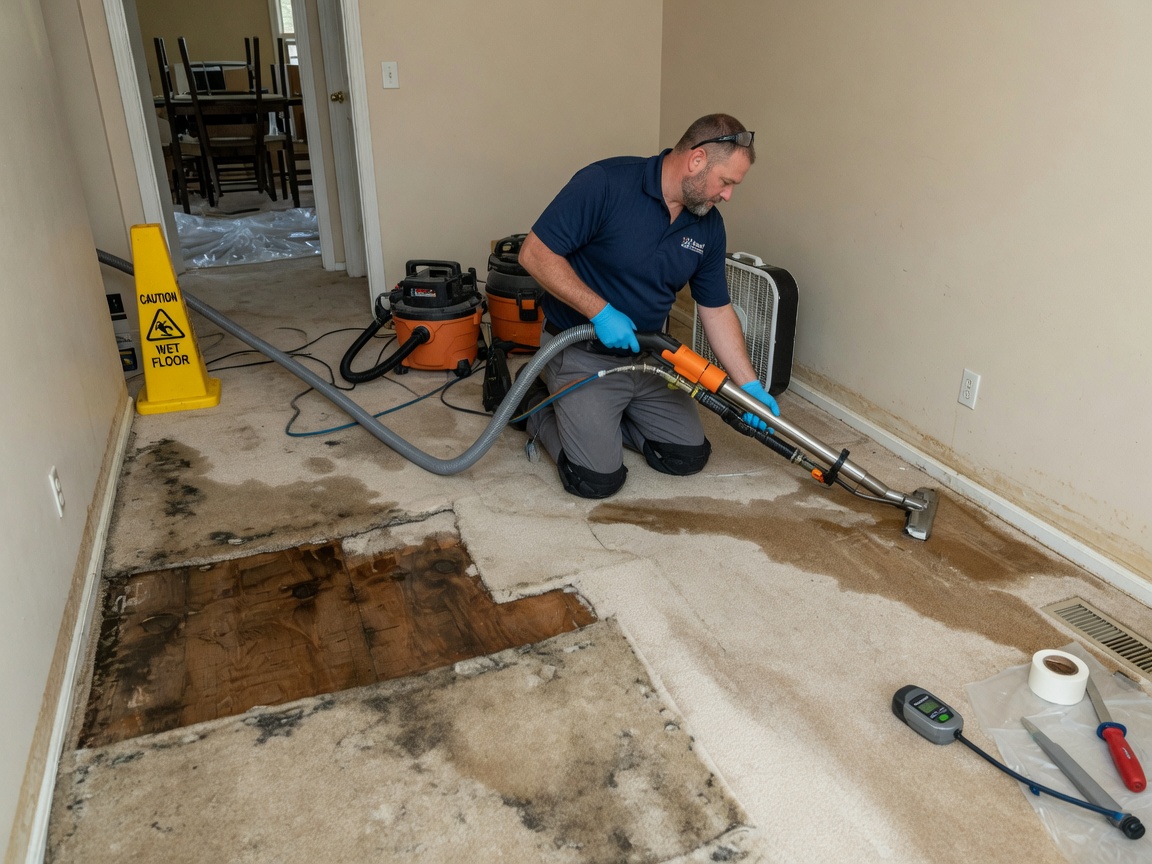
Newark's older multi-family housing stock in Essex County frequently experiences carpet saturation when freezing temperatures burst pipes in row homes near I-280 and NJ-21. Local crews contend with elevated humidity from the nearby airport and Garden State Parkway corridors that accelerates mold growth in tight basements. Quick extraction and drying become essential in this humid subtropical climate where summer storms and winter thaws compound water intrusion around landmarks like Newark Penn Station.
Carpet Water Damage Repair in Newark — What We Handle
- ✓Dense urban layouts near the Prudential Center require specialized equipment to reach upper floors without disrupting high-traffic streets.
- ✓Proximity to major highways increases exposure to runoff flooding that suburban New Jersey properties rarely face.
- ✓Older Newark housing demands targeted subfloor checks after pipe failures common in the city's cold winters.
Carpet Water Damage Repair Services We Offer in Newark
✓Carpet Extraction and Drying
Removes standing water from carpet fibers and backing then applies directed airflow drying to limit mold growth in humid Howell summers.
✓Underpad Replacement
Cuts out saturated foam padding and installs new material matched to existing carpet thickness, preventing future odor issues in Squankum homes.
✓Stain and Odor Treatment
Applies enzyme cleaners to pet waste or flood residue stains before drying to stop permanent discoloration on older carpet in Adelphia.
✓Subfloor Moisture Testing
Uses meters to check plywood or concrete beneath carpet near the Manasquan Reservoir, identifying hidden damp spots that cause recurring problems.
✓Carpet Reinstallation After Drying
Stretches and reattaches cleaned carpet to tack strips once the subfloor reaches safe moisture levels in Monmouth County residences.
Howell homes built before 1990 often have glued-down carpet over concrete slabs or older plywood subfloors near the Manasquan Reservoir. Once water sits, the high humidity from humid subtropical summers keeps the backing damp for weeks, feeding mold growth under the pad. Technicians must pull carpet carefully to avoid tearing seams in rooms with wall-to-wall installations common in Squankum ranch houses, then extract standing water before it migrates into adjacent hardwood or tile.
Cold winter temperatures in Monmouth County force homeowners to run heating systems that push moist air downward, trapping moisture in carpet installed over crawl spaces. This creates edge cases where water travels under baseboards into Adelphia split-levels. Restoration requires separating carpet from tack strips without damaging the original flooring, followed by industrial drying directed at the subfloor to prevent warping that would show through new carpet.
How It Works in Newark
- 1
On-Site Assessment
Technician inspects carpet, pad, and subfloor in the affected Howell room, noting water source and spread toward nearby walls or HVAC registers.
- 2
Water Extraction
Portable extractors pull water from carpet and pad, then baseboards are lifted to reach trapped moisture along exterior walls common in Squankum.
- 3
Drying And Monitoring
Air movers and dehumidifiers run until readings drop below 15 percent, with daily checks to adjust equipment as summer humidity fluctuates.
- 4
Pad Replacement And Reset
Saturated padding is removed, new material installed, and carpet is stretched back into place once the subfloor tests dry.
Serving All of Newark
We regularly handle carpet water damage repair jobs near:
- 📍Newark Penn Station
- 📍Prudential Center
- 📍Newark Museum
- 📍Branch Brook Park
- 📍New Jersey Performing Arts Center
Carpet Water Damage Repair Pricing in Newark
Pricing varies by room size, water category, and whether pad replacement or subfloor work is required.
Want the full picture of this service? See our Carpet Water Damage Repair page, or everything we do in Newark, NJ.