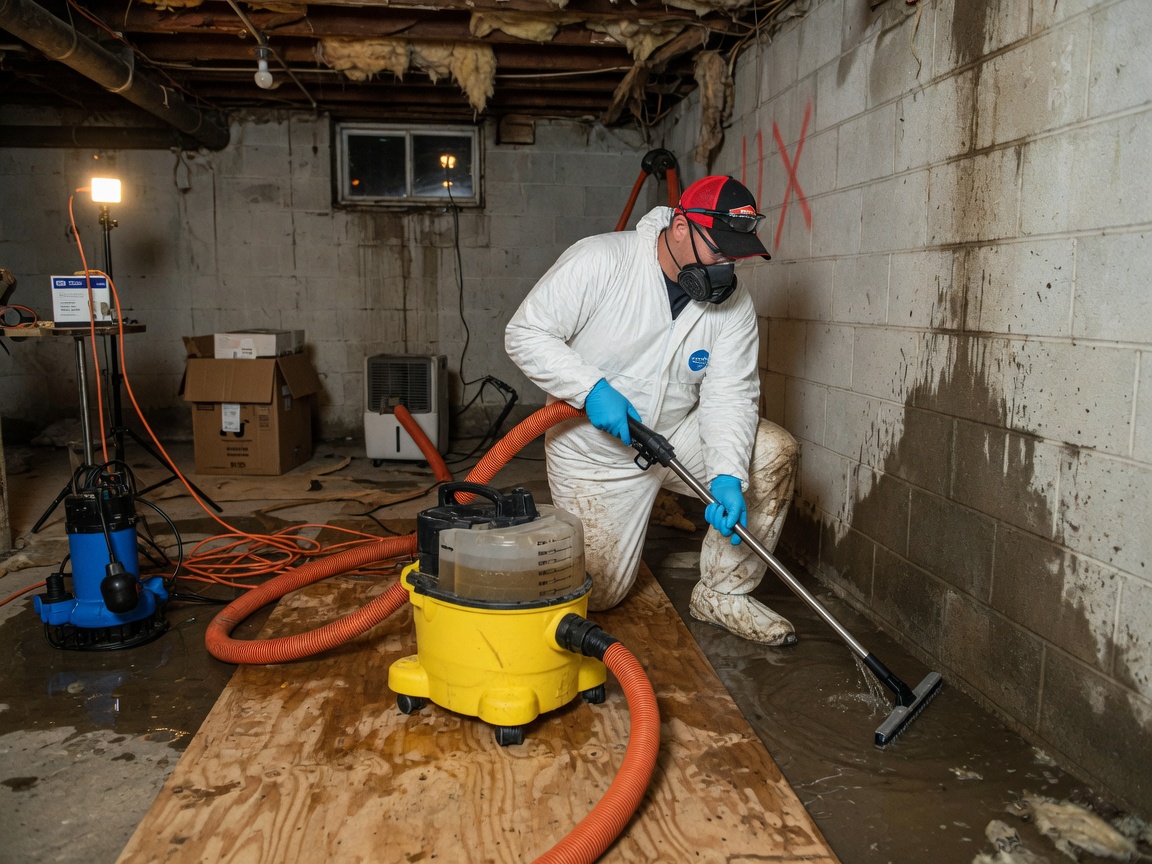
Newark's older brick row homes and multi-family buildings in Essex County often see emergency water extraction focused on basements where frozen pipes fail during cold winters. Extraction crews work around tight urban lots near Newark Penn Station and the Garden State Parkway while managing runoff from the Passaic River. Hot, humid summers bring sudden storms that overwhelm drains along NJ-21 and US-1, requiring fast removal to limit mold growth in the city's dense housing stock.
Emergency Water Extraction in Newark — What We Handle
- ✓Tight access and limited parking around landmarks like the Prudential Center and Branch Brook Park slow equipment staging compared with suburban jobs.
- ✓High water tables and proximity to Newark Liberty International Airport increase the chance of repeated flooding from both weather and infrastructure leaks.
- ✓Disposal and drying must account for Newark's humid subtropical climate and older building materials that retain moisture longer than newer construction.
Howell sits in humid subtropical Monmouth County where winter freezes often burst pipes in 1970s-1990s split-levels common around Adelphia and Squankum. When water enters basements or crawl spaces near the Manasquan Reservoir watershed, extraction must start within hours to keep moisture from wicking into concrete slabs and joists. Blue Dot crews arrive with truck-mounted pumps rated for several hundred gallons per minute and begin removing standing water before humidity spikes from the area’s hot summers.
Older ranch homes near Howell Township Recreation fields frequently have finished lower levels without proper vapor barriers. Once water reaches carpet pad or particleboard subfloors, extraction alone is not enough; crews must pull saturated materials immediately to prevent hidden mold growth behind baseboards. Cold winter nights slow evaporation, so portable air movers and dehumidifiers run continuously until moisture readings drop below 12 percent on wood and drywall.
How It Works in Newark
- 1
Arrival And Safety Check
Technician arrives within the service window, shuts off water source if still active, and verifies electrical safety before equipment enters the home.
- 2
Standing Water Removal
Truck-mounted and portable pumps extract bulk water from floors and low areas, directing discharge away from neighboring properties.
- 3
Moisture Mapping
Infrared and pin meters locate hidden water in walls, subfloors, and insulation around Adelphia and Squankum properties.
- 4
Initial Drying Setup
Air movers and dehumidifiers are placed and logged; equipment runs until readings meet industry dry standards.
Emergency Water Extraction Services We Offer in Newark
✓Basement Water Extraction
Pump standing water from Howell basements after pipe bursts or reservoir-area flooding, followed by immediate moisture mapping.
✓Carpet and Pad Removal
Cut and dispose of saturated carpet and pad in Squankum homes to stop mold from forming under tack strips.
✓Crawl Space Drying
Extract water and install drying systems under Adelphia ranch homes where vapor barriers are often missing or damaged.
✓Sewage Water Extraction
Handle contaminated water removal from backed-up lines common in older Monmouth County neighborhoods during heavy rains.
✓Attic Water Extraction
Remove roof-leak water from attics before it soaks insulation and ceiling drywall in Freehold-border homes.
Serving All of Newark
We regularly handle emergency water extraction jobs near:
- 📍Newark Penn Station
- 📍Prudential Center
- 📍Newark Museum
- 📍Branch Brook Park
- 📍New Jersey Performing Arts Center
- 📍Newark Liberty International Airport
Emergency Water Extraction Pricing in Newark
Pricing varies by water volume, depth, and materials affected. Most Howell jobs fall into mid-range extraction categories.
Want the full picture of this service? See our Emergency Water Extraction page, or everything we do in Newark, NJ.