
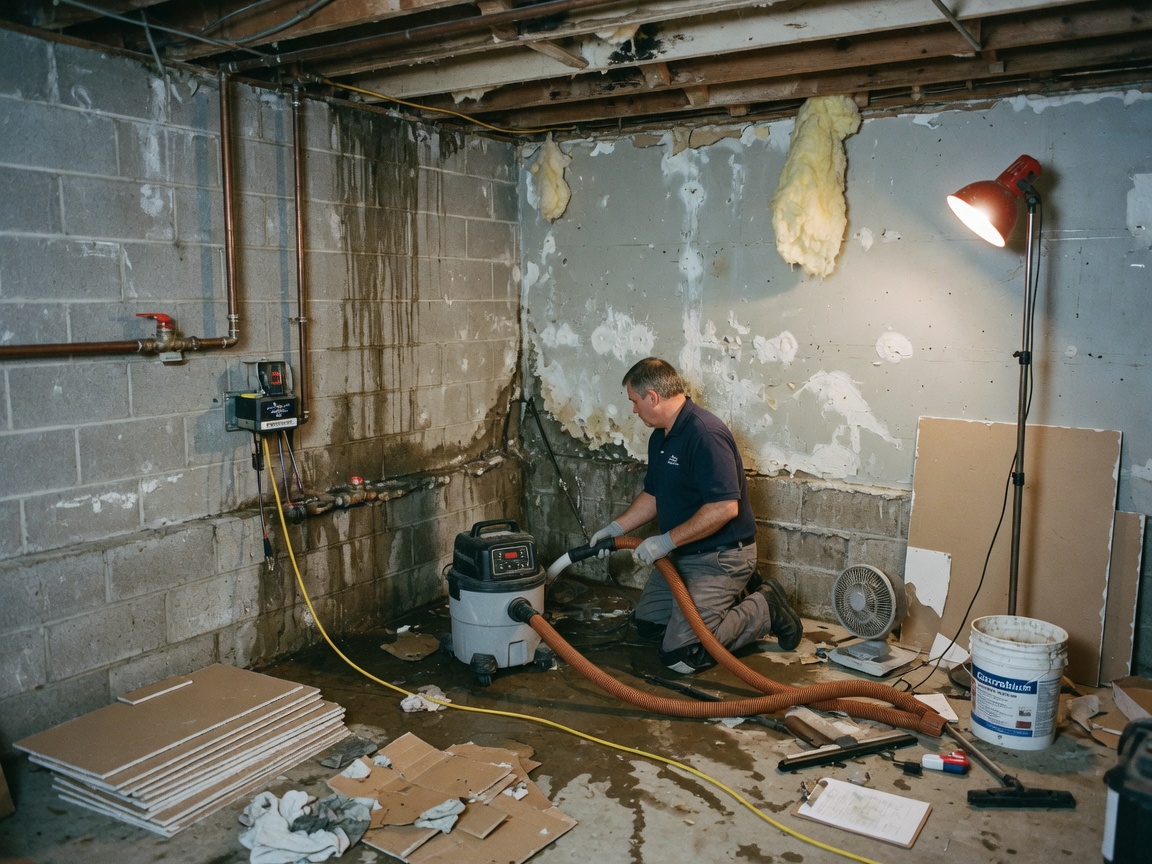
Newark's early-20th-century row homes and brownstones sit on shallow basements where aging clay sewer lines crack under repeated freeze-thaw cycles and heavy spring runoff. Cold winters send bursts through uninsulated pipes while traffic vibration from I-78 and I-280 loosens joints in these dense urban lots. Crews work around tight access points near Newark Penn Station and Prudential Center, coordinating with Essex County utilities to restore flow without disrupting nearby neighborhoods.
Basement Water Damage Repair in Newark — What We Handle
- ✓Camera inspections focus on clay lines common in pre-1950 Newark housing rather than modern PVC found in newer suburbs.
- ✓Winter response must account for snowmelt pooling against foundations along the Garden State Parkway corridor.
- ✓Permit and off-hour scheduling required for work near high-traffic routes like US-1 and NJ-21.
Howell’s older housing stock in neighborhoods like Adelphia and Squankum often features concrete block or poured foundations built before modern waterproofing standards. These basements sit on soils that stay saturated longer due to proximity to the Manasquan Reservoir, so even moderate rain can push groundwater through joints and cracks. Cold winter snaps followed by rapid thaws create freeze-thaw cycles that widen hairline fissures, turning small seepage into standing water that damages finished flooring and stored items.
Effective repair starts with locating the exact water path rather than simply pumping out the visible water. Technicians check for hydrostatic pressure from the reservoir side, failed perimeter drains, and condensation on cold walls during humid summers. In many cases, a combination of interior French drains tied to a reliable sump and exterior grading corrections is required to keep water from returning after the next heavy storm that rolls through Monmouth County.
How It Works in Newark
- 1
On-Site Assessment
Technician inspects the basement, identifies water entry points, and checks soil conditions around homes in Adelphia or Squankum.
- 2
Water Removal
Pumps out standing water and extracts moisture from affected materials before mold risk increases in the humid climate.
- 3
Source Correction
Seals cracks, repairs or installs drainage, and improves grading to prevent recurrence from reservoir-influenced groundwater.
- 4
Drying And Monitoring
Runs drying equipment and documents moisture levels until the structure reaches safe readings for Howell’s seasonal swings.
Basement Water Damage Repair Services We Offer in Newark
✓Foundation Crack Injection
Injects polyurethane or epoxy into active cracks in concrete or block walls to stop groundwater intrusion common in Adelphia homes.
✓Sump Pump Installation and Repair
Replaces or upgrades sump systems to handle the elevated water table near Manasquan Reservoir and Squankum properties.
✓Interior French Drain System
Installs perimeter drains that capture seepage before it reaches living space, essential for older Howell basements with poor exterior grading.
✓Water Extraction and Structural Drying
Removes standing water and forces moisture out of block walls and subfloors using equipment sized for Monmouth County humidity levels.
✓Basement Waterproofing Membrane
Applies dimple-mat or cementitious coatings on interior walls to manage condensation and minor seepage during hot, humid summers.
Serving All of Newark
We regularly handle basement water damage repair jobs near:
- 📍Newark Penn Station
- 📍Prudential Center
- 📍Newark Museum
- 📍Branch Brook Park
- 📍New Jersey Performing Arts Center
Basement Water Damage Repair Pricing in Newark
Upfront quotes after inspection; price depends on water volume, square footage, and whether drainage upgrades are needed.
Want the full picture of this service? See our Basement Water Damage Repair page, or everything we do in Newark, NJ.