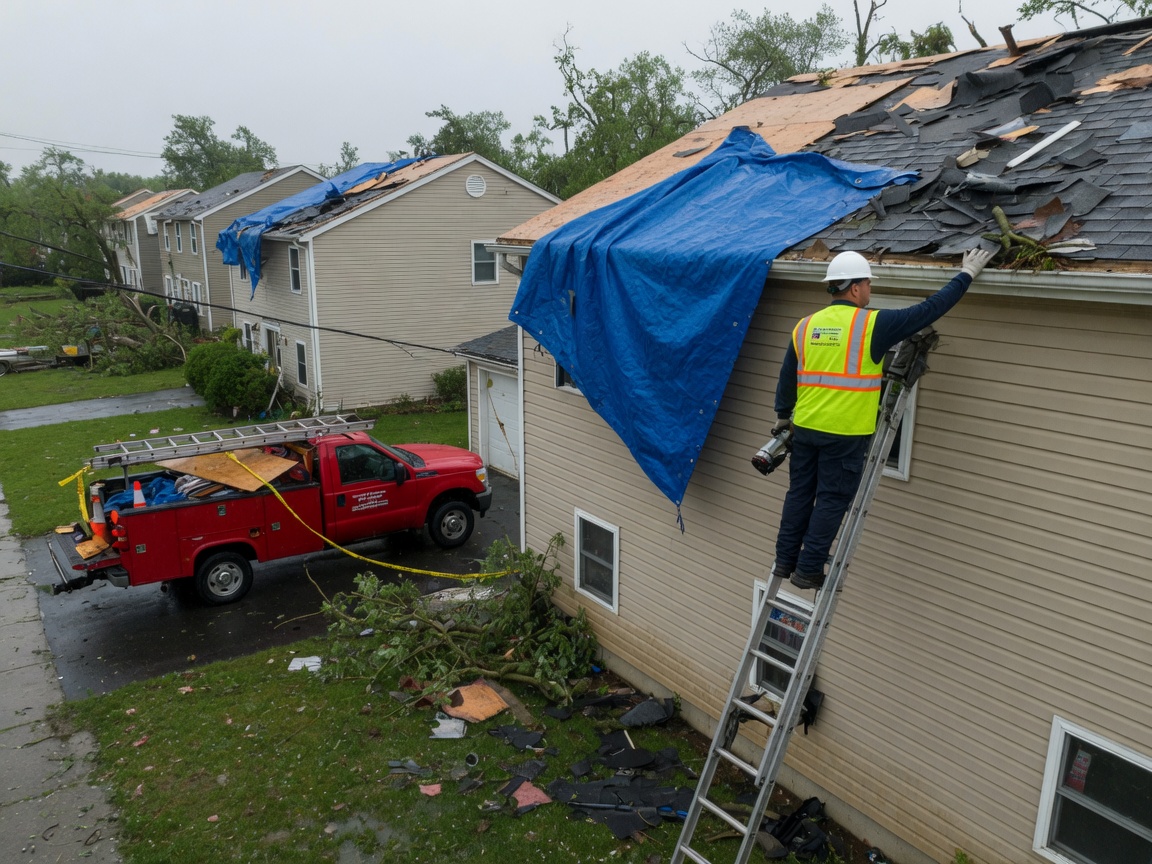
Storm damage in Wayne often hits homes around William Paterson University and the Wayne Towne Center when heavy rains overwhelm drainage along NJ-23 and I-80. Cold winters bring ice dams on roofs in the suburban neighborhoods near Preakness Valley Golf Course, leading to interior leaks that require targeted extraction. Restoration crews must navigate the mix of single-family homes and university-adjacent properties while contending with the area's humid subtropical swings that accelerate mold growth after summer storms.
Storm Damage Restoration in Wayne — What We Handle
- ✓Access challenges near High Mountain Park Preserve during high winds
- ✓Frequent pipe bursts from freeze-thaw cycles on US-46 corridors
- ✓Coordination with local traffic on NJ-208 for equipment staging after major events
Howell's humid subtropical climate brings hot summers with sudden thunderstorms and cold winters that often deliver nor'easters, both of which push water into basements and crawl spaces faster than many homeowners expect. Properties near Manasquan Reservoir or Howell Township Recreation land sit on slightly lower terrain where runoff collects, making hidden saturation in sill plates and rim joists a common finding after even moderate events. Older housing stock in Squankum and Adelphia frequently features fieldstone foundations and unvented crawl spaces that trap moisture long after the rain stops, requiring targeted drying rather than surface-level fans.
When storms hit Freehold or Wall borders, wind-driven rain often forces water past window flashing and roof valleys on 1970s–1990s split-levels that dominate the township. We see repeated failures at the intersection of vinyl siding and brick veneer where sealant has dried out, allowing water to travel behind the sheathing and into insulation. Code requirements in Monmouth County now call for vapor barriers in any repaired crawl space, so we document existing conditions before work begins to avoid later inspection issues.
How It Works in Wayne
- 1
Initial Safety and Assessment
Check for structural concerns and electrical hazards, then document water intrusion points specific to the home's location in Howell.
- 2
Water Removal
Extract standing water from affected areas using pumps suited to the volume found in local basements and crawl spaces.
- 3
Drying and Monitoring
Place air movers and dehumidifiers, then track moisture levels in walls and floors until readings return to normal for the climate.
- 4
Restoration and Final Check
Repair or replace damaged materials and verify the home meets local standards before returning it to use.
Storm Damage Restoration Services We Offer in Wayne
✓Emergency Board Up Services
Secure openings from wind-blown debris or fallen trees to prevent further water entry on Howell homes after storms.
✓Storm Water Extraction
Remove standing water from basements and crawl spaces common in Squankum after heavy rainfall or reservoir overflow.
✓Roof Leak Drying and Repairs
Address wind-driven rain penetration through older roofing on Adelphia split-levels before hidden saturation spreads to ceilings.
✓Basement Flood Restoration
Extract, dry, and sanitize lower levels in homes near Howell Township Recreation where runoff pools during nor'easters.
✓Post-Storm Mold Prevention
Apply antimicrobial treatments and improve ventilation in damp crawl spaces to stop growth after Monmouth County winter storms.
✓Structural Drying and Dehumidification
Deploy commercial equipment to pull moisture from insulation and framing in older Squankum homes before it affects electrical systems.
Serving All of Wayne
We regularly handle storm damage restoration jobs near:
- 📍William Paterson University
- 📍Wayne Towne Center
- 📍Preakness Valley Golf Course
- 📍High Mountain Park Preserve
Storm Damage Restoration Pricing in Wayne
Costs depend on square footage affected, depth of water, and whether hidden damage requires opening walls or floors.
Want the full picture of this service? See our Storm Damage Restoration page, or everything we do in Wayne, NJ.