
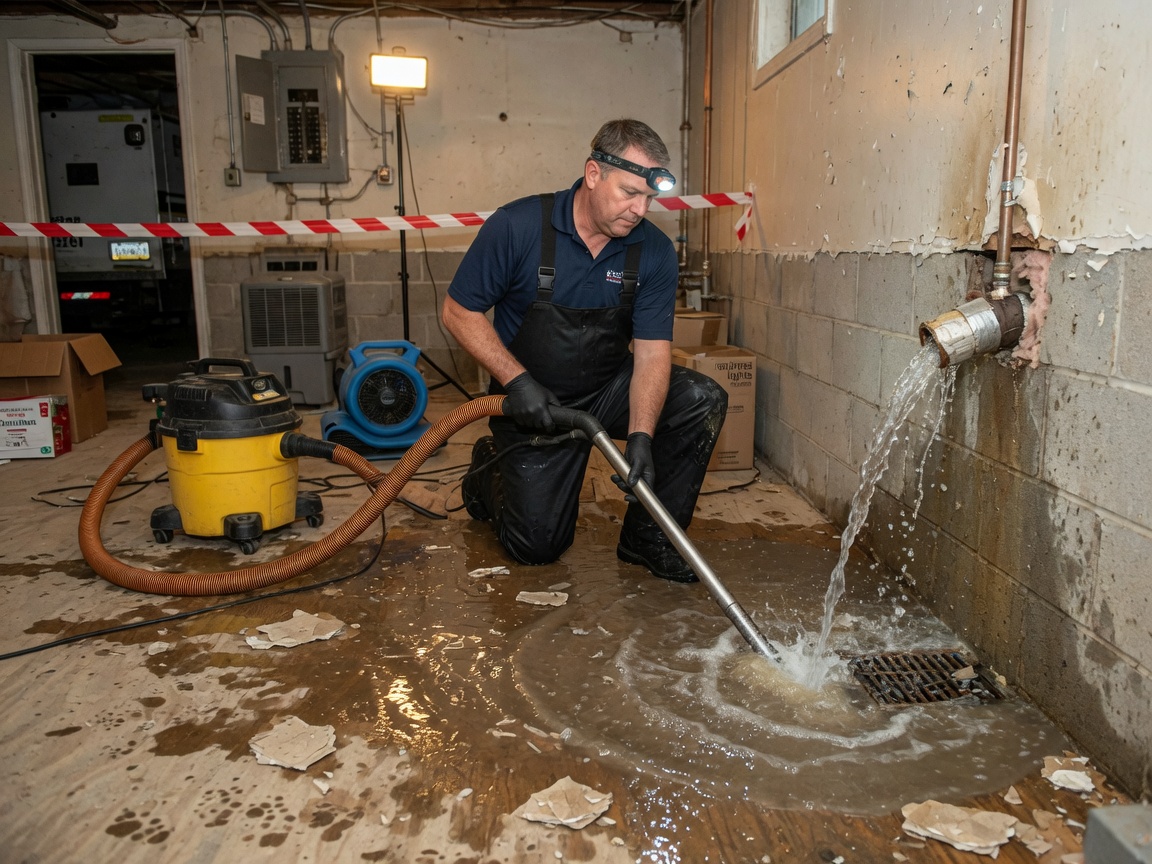
New Brunswick's older housing stock around Rutgers University and Johnson & Johnson headquarters sees frequent burst pipes when winter freezes hit the Raritan River corridor. Crews from Howell reach these Middlesex County properties via NJ-18, US-1, and I-287 to extract water before it spreads through multi-unit buildings near the State Theatre and New Brunswick Performing Arts Center. Hot summers followed by sudden cold snaps stress aging lines in dense student and pharma-area neighborhoods, requiring targeted drying to protect nearby landmarks and infrastructure.
Burst Pipe Water Removal in New Brunswick — What We Handle
- ✓Winter pipe bursts spike along NJ-27 and I-287 due to freeze-thaw cycles in humid subtropical winters.
- ✓Tight access in Rutgers-adjacent blocks and Raritan River flood zones demands compact equipment not needed in suburban Howell.
- ✓Pharma and healthcare sites near Johnson & Johnson require faster containment to limit business disruption.
Howell sits in Monmouth County with many homes built before 1980 in Adelphia and Squankum that still carry galvanized or polybutylene lines. Cold winters push temperatures below freezing for days, forcing water to expand inside walls and crawl spaces near the Manasquan Reservoir watershed. When a pipe bursts, water travels along floor joists and settles in finished basements or under Howell Township Recreation fields that sit on clay-heavy soil, slowing natural drainage.
Technicians begin by isolating the supply, then use moisture meters and infrared cameras to map migration paths that often reach neighboring rooms or the second floor. Extraction focuses on carpet pads, baseboards, and insulation before cabinetry or hardwood is removed. Drying equipment runs continuously because humid subtropical summers follow the winter event and can restart mold growth within 48 hours if relative humidity stays above 60 percent.
How It Works in New Brunswick
- 1
Arrival And Safety Shutoff
Crew reaches the Howell address, shuts off main water, and assesses electrical hazards before any extraction begins.
- 2
Moisture Documentation
Meters and cameras record saturation levels in walls, floors, and ceilings for insurance and township records.
- 3
Water Removal
Pumps and extraction wands pull standing water from basements and crawl spaces common in Squankum homes.
- 4
Drying And Monitoring
Equipment runs daily with readings logged until materials reach acceptable moisture content for Monmouth County winters.
Burst Pipe Water Removal Services We Offer in New Brunswick
✓Emergency Water Extraction
Portable pumps and vacuums remove standing water from basements and crawl spaces within hours of a reported burst in Howell.
✓Hidden Moisture Mapping
Infrared imaging locates water behind drywall and under floors in Adelphia homes where bursts travel along original lath and plaster.
✓Structural Drying
Air movers and dehumidifiers restore lumber and subfloors in Squankum properties before humidity from nearby reservoirs drives secondary damage.
✓Content Removal and Storage
Furniture, rugs, and personal items are catalogued and moved to climate-controlled storage while water-damaged areas are dried.
✓Pipe Isolation and Temporary Supply
Technicians cap damaged lines and set up bypass lines so residents in Howell can keep water service during full restoration.
Serving All of New Brunswick
We regularly handle burst pipe water removal jobs near:
- 📍Rutgers University
- 📍Raritan River
- 📍Johnson & Johnson Headquarters
- 📍State Theatre
- 📍New Brunswick Performing Arts Center
Burst Pipe Water Removal Pricing in New Brunswick
Upfront quotes after inspection; final cost depends on water volume and hidden damage found in older Howell homes.
Want the full picture of this service? See our Burst Pipe Water Removal page, or everything we do in New Brunswick, NJ.