
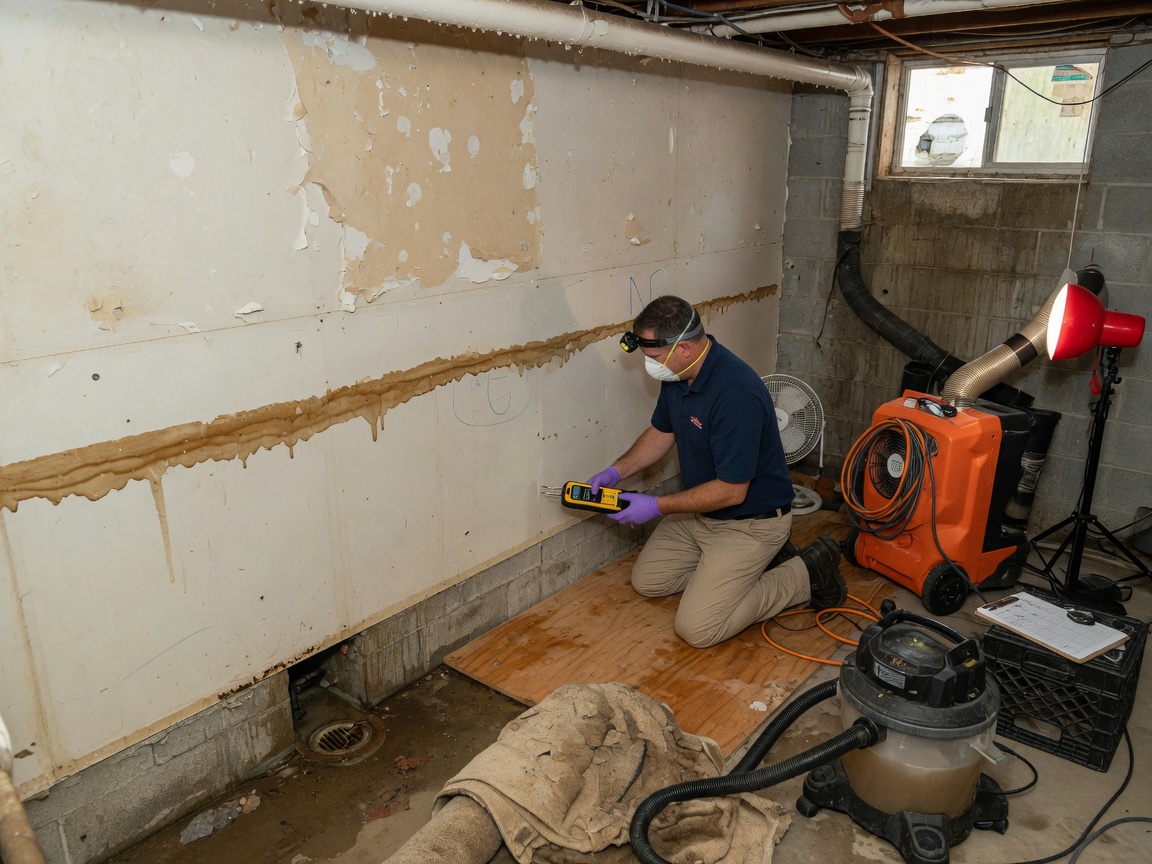
Freehold's older housing stock around the Monmouth County Courthouse and Freehold Borough Hall often sees pipe bursts when winter temperatures drop below freezing. Properties near Turkey Swamp Wildlife Management Area and along I-195 or NJ-33 experience repeated seepage after heavy summer storms that overwhelm older foundations. Crews based in Howell respond same-day to contain moisture before it spreads through the tight layouts typical of homes near Freehold Raceway.
Water Damage Restoration in Freehold — What We Handle
- ✓Winter access on narrow downtown streets around Freehold Borough Hall requires smaller equipment than work on newer subdivisions.
- ✓Historic structures near the courthouse demand slower drying protocols to protect original plaster and woodwork.
- ✓Flooding patterns tied to Turkey Swamp runoff differ from those along the Jersey Shore, changing extraction priorities.
Howell sits in Monmouth County with a humid subtropical climate that brings hot humid summers and freezing winter temperatures. Older homes in Adelphia and Squankum often feature crawl spaces and slab foundations that trap water after heavy rains or pipe bursts. When winter temperatures drop, supply lines in unheated basements and exterior walls can split, sending water into finished spaces and insulation. Crews must pull carpet, open walls, and run high-velocity air movers for days because residual moisture in the area's clay-heavy soil keeps humidity high and slows drying.
Summer storms dump several inches of rain quickly around the Manasquan Reservoir and Howell Township Recreation fields, sending runoff toward lower lots in Squankum. Water enters through window wells, garage doors, and older roof valleys common on 1970s and 1980s housing stock. Extraction alone is not enough; technicians must locate hidden pockets behind vinyl siding and in HVAC ducts that serve both floors. Failure to address these areas leads to musty odors that travel through the shared ductwork found in many split-level homes near Freehold and Wall.
How It Works in Freehold
- 1
On-Site Assessment
Technician inspects all affected rooms, records moisture levels in walls and floors, and identifies the water source while the homeowner remains on site.
- 2
Water Removal
Standing water is extracted with pumps and wands, then salvageable contents are moved to a dry area before drying equipment is positioned.
- 3
Drying And Monitoring
Air movers and dehumidifiers run continuously with daily moisture checks until readings return to normal levels for the Monmouth County climate.
- 4
Restoration Work
Damaged materials are replaced, surfaces are treated, and the space is returned to pre-loss condition with final walkthrough.
Water Damage Restoration Services We Offer in Freehold
✓Emergency Water Extraction
Rapid removal of standing water from basements and crawl spaces in Adelphia and Squankum homes using truck-mounted pumps and portable extractors.
✓Structural Drying
Placement of industrial dehumidifiers and air movers to dry framing, insulation, and subfloors after summer storms or winter pipe failures.
✓Basement Water Damage Repair
Removal of saturated drywall, insulation, and flooring followed by antimicrobial treatment in lower levels common to older Howell homes.
✓Carpet and Flooring Restoration
Extraction, drying, and reinstallation or replacement of carpet and hardwood affected by reservoir-area flooding or appliance leaks.
✓Ceiling and Wall Water Damage Repair
Targeted demolition and reconstruction of ceilings and interior walls where roof leaks or second-floor overflows have traveled downward.
Serving All of Freehold
We regularly handle water damage restoration jobs near:
- 📍Freehold Raceway
- 📍Monmouth County Courthouse
- 📍Freehold Borough Hall
- 📍Turkey Swamp Wildlife Management Area
Water Damage Restoration Pricing in Freehold
Cost depends on the volume of water, number of affected rooms, and whether structural materials must be removed.
Want the full picture of this service? See our Water Damage Restoration page, or everything we do in Freehold, NJ.